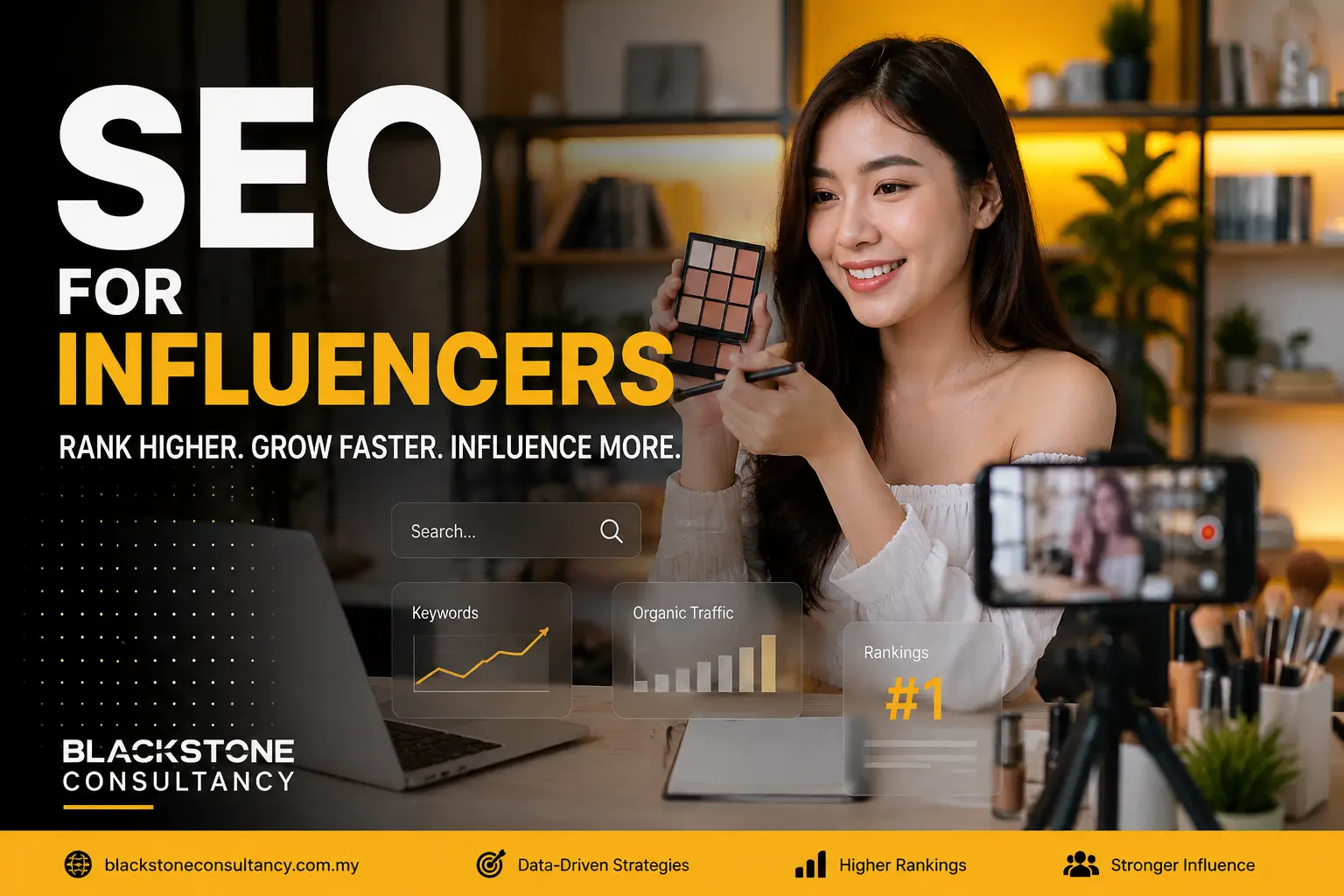
Influencers are usually told to post more, use trending sounds, improve hooks, and chase the algorithm. That advice is not wrong, but it is incomplete. If your entire online presence depends only on TikTok, Instagram, YouTube, X, or any single platform, your discoverability is controlled by a feed you do not own.
That is where SEO for influencers becomes powerful. SEO gives creators a way to be found through search, not just through scrolling. It helps your name, niche, offers, collaborations, videos, images, articles, podcast appearances, and personal brand pages show up when people are actively looking for you or for someone like you.
This is a “free guide for brokies,” but that does not mean cheap strategy. It means lean strategy. It means using free tools, simple content systems, smart keyword targeting, and your existing social content to build search visibility without needing a massive agency budget on day one.
For influencers, SEO is not only about ranking blog posts. It is about becoming easier to discover across Google, image search, video search, branded searches, collaboration searches, and AI-assisted search experiences. A beauty creator can rank for product comparison content. A fitness creator can rank for workout guides. A food influencer can rank for local restaurant content. A finance creator can rank for beginner guides. A travel creator can rank for itineraries. A gaming creator can rank for tutorials, reviews, and community resources.
The main idea is simple: social media helps people discover you while they are scrolling, but SEO helps people discover you when they are searching with intent. When those two channels work together, your content becomes more durable. A viral video may fade in a week, but a well-optimised guide, profile page, video page, or resource can keep bringing visitors for months or years.
If you want to see how structured digital systems are turned into real project outcomes, you can review Blackstone Consultancy’s practical digital growth case studies. For influencers, the lesson is clear: creativity is stronger when it is supported by a system.
What is SEO for influencers?
SEO for influencers is the process of making a creator, personal brand, and content library easier to find through search engines. It includes keyword research, website optimisation, social profile optimisation, video SEO, image SEO, content planning, internal linking, backlinks, structured data, and branded search management.
Traditional SEO often focuses on companies, ecommerce stores, and service websites. Influencer SEO focuses on a person. That person may have a niche, a face, a voice, a set of platforms, a content style, collaborations, affiliate links, digital products, courses, speaking work, or brand partnerships. The goal is to help search engines understand who the influencer is, what they are known for, and why their content is useful.
| SEO Area | What It Means for Influencers | Free or Cheap Starting Point |
|---|---|---|
| Branded SEO | Making your name, handle, and personal brand searchable. | Create a simple website, consistent profile bios, and a brand name page. |
| Content SEO | Turning your videos, captions, and ideas into searchable articles or guides. | Repurpose your best social posts into blog posts or resource pages. |
| Video SEO | Helping your videos appear in search results and be understood by search engines. | Use strong titles, descriptions, transcripts, thumbnails, and dedicated pages. |
| Image SEO | Making your photos, graphics, and visual content more discoverable. | Use descriptive file names, alt text, relevant surrounding text, and image pages. |
| Collaboration SEO | Helping brands find you for sponsorships, campaigns, and partnerships. | Create a media kit page and optimise it for your niche plus location. |
| Local SEO | Helping you rank as a creator in a specific city, region, or country. | Use location pages, local examples, and consistent local mentions. |
Why influencers should care about SEO
Many influencers treat search as something only businesses need. That is a mistake. Influencers are businesses, even if they are not fully registered companies yet. Your content, audience, reputation, collaborations, and monetisation channels are all business assets.
Google’s SEO Starter Guide explains that SEO helps search engines crawl, index, and understand content. For influencers, that means your creator website, profile pages, video pages, image pages, and long-form content should be built in a way that search engines can understand. Google Search Central’s SEO Starter Guide is a useful baseline because it focuses on helping sites become easier to understand and use.
The biggest reason influencers need SEO is control. Social media reach can change quickly. A platform update, a shadowban scare, a drop in engagement, or a content format shift can affect your income. SEO gives you another discovery channel. It also gives brands another way to verify your authority. When a potential sponsor searches your name, your niche, or your location, you want them to find professional, relevant, and trust-building pages.
Simple creator truth: followers show popularity, but search visibility shows authority. The best influencer brands use both.
The brokie-friendly SEO mindset
You do not need a huge budget to start SEO as an influencer. You need consistency, clarity, and a basic system. The “brokie” version of influencer SEO is not about doing low-quality work. It is about avoiding waste.
Instead of paying for every premium SEO tool immediately, start with what you already have: your content ideas, your social analytics, search suggestions, Google Search Console, free keyword research methods, competitor observation, a simple website, and AI-assisted planning. You can later upgrade when your content starts generating traffic, enquiries, affiliate sales, or sponsorship interest.
Expensive but not always necessary
- Premium SEO tools from day one
- Large blog teams before proving demand
- Complicated website builds
- Random backlink packages
- Over-designed media kits nobody reads
Free or lean and actually useful
- A clean personal brand website
- A searchable creator bio page
- Keyword-focused content topics
- Repurposed video transcripts
- Simple analytics tracking
Infographic: the influencer SEO system
Start with your searchable niche
Before you write content or build pages, you need to define what people should find you for. Most influencers describe themselves by platform: “TikTok creator,” “Instagram creator,” “YouTuber,” or “content creator.” Search engines and sponsors need more detail.
A stronger SEO identity includes your niche, location, audience, and value. For example, “modest fashion influencer in Malaysia” is clearer than “fashion creator.” “Sarawak food reviewer” is clearer than “foodie.” “beginner calisthenics coach for students” is clearer than “fitness guy.” The more specific your positioning is, the easier it becomes to create searchable content.
| Weak Creator Positioning | Better SEO Positioning | Search Opportunity |
|---|---|---|
| Beauty influencer | Malaysian skincare creator for acne-prone skin | Product reviews, routines, ingredient explainers |
| Food blogger | Kuching halal food reviewer | Restaurant guides, local lists, map-based content |
| Fitness creator | Budget home workout coach for beginners | Workout plans, equipment guides, beginner routines |
| Travel creator | Solo travel creator for Southeast Asia | Itineraries, packing lists, safety tips, destination guides |
| Gaming creator | Mobile gaming tutorial creator | Game guides, ranking tips, patch explanations |
Build a creator website, even if it is simple
A creator website does not need to be complicated. It can start with five pages: Home, About, Work With Me, Blog or Resources, and Contact. The purpose is to give search engines and sponsors a central place to understand your brand.
Your website is also where you can place long-form content that social platforms are not designed to hold. A TikTok review can become a blog article. A YouTube video can become a transcript page. An Instagram carousel can become a guide. A brand campaign can become a case study. A podcast appearance can become a media page.
If the website foundation is weak, SEO becomes harder. Influencers who want a clean, fast, and professional creator hub can use a conversion-ready personal brand website to make their portfolio, media kit, and search content easier to organise.
Brokie move: start with a clean one-page website if that is all you can afford. Add sections for your name, niche, best content, collaboration offer, media kit, contact form, and links to your strongest platforms. Then expand into blog posts and resource pages later.
Keyword research for influencers
Influencer keyword research is not about stuffing keywords everywhere. It is about understanding how people search for your niche. You need to know what your audience asks, what sponsors search, what beginners need, and what topics repeatedly appear in your comments.
Start with four keyword buckets: audience problems, product or service terms, creator identity terms, and collaboration terms. This gives you content that helps followers and content that helps brands find you.
| Keyword Bucket | Example for Influencers | Content Idea |
|---|---|---|
| Audience problems | how to style oversized shirts | Beginner styling guide with photos and short videos |
| Product or service terms | best budget microphones for creators | Comparison review with affiliate links |
| Creator identity terms | fitness influencer in Kuching | Personal brand page and local creator profile |
| Collaboration terms | Malaysia lifestyle influencer media kit | Work With Me page with campaign examples |
| Evergreen education | how to start meal prepping as a student | Long-form guide plus downloadable checklist |
Graph: keyword difficulty vs creator opportunity
Influencers usually should not start with the biggest keywords. A small creator trying to rank for “fashion” or “fitness” will struggle. A smarter approach is to target specific, useful, niche phrases first.
The chart above is an illustrative way to think about SEO opportunity. Big keywords may look exciting, but smaller, more specific keywords are often better for creators because they match real audience problems and are easier to turn into useful content.
Turn social posts into SEO content
Influencers already create content. The issue is that most of it disappears into platform feeds. SEO lets you recycle your best ideas into pages that can be found again and again.
Look at your best-performing videos, carousels, captions, livestream answers, and comment replies. If a topic already performs well socially, it may deserve a searchable page. For example, if your video about “cheap cafe spots in Kuching” gets strong engagement, turn it into a full article with photos, map notes, price ranges, personal recommendations, and internal links to related food guides.
| Social Content | SEO Version | Extra Value to Add |
|---|---|---|
| 30-second product review | Full product review article | Pros, cons, price, who should buy, alternatives |
| Instagram carousel tips | Step-by-step beginner guide | Examples, checklist, FAQs, downloadable template |
| YouTube tutorial | Video page with transcript | Summary, chapters, screenshots, tools used |
| Livestream Q&A | FAQ article | Questions grouped by topic and search intent |
| Brand collaboration post | Campaign case study | Brief, content approach, results, audience response |
People-first content beats fake SEO content
Good influencer SEO is not about writing robotic articles that nobody wants to read. Google’s guidance on helpful, reliable, people-first content says its ranking systems are designed to prioritise content created to benefit people, not content created only to manipulate rankings. Google’s people-first content guidance is especially important for influencers because personal experience is one of your strongest advantages.
Your value is not just the keyword. Your value is your lived experience, testing process, opinion, photos, video proof, mistakes, comparisons, and personality. A generic article titled “Best Skincare Products” is easy to copy. A detailed article showing your own routine, your skin type, what worked, what failed, what you would repurchase, and who should avoid each product is much harder to replace.
Weak influencer SEO content
- Generic advice copied from other blogs
- No personal examples or proof
- Too many keywords forced into sentences
- No original images, videos, or testing notes
- Created only to rank, not to help
Strong influencer SEO content
- Clear experience and personal point of view
- Real examples, photos, screenshots, and results
- Natural keyword use
- Helpful structure with tables and FAQs
- Created for both humans and search engines
Image SEO for influencers
Influencers often have a major advantage in image SEO because they already create original visuals. The problem is that many creators upload images with weak file names like IMG_3920.jpg, no alt text, and no surrounding explanation.
Google’s image SEO documentation recommends optimising image landing pages, using useful titles and descriptions, adding structured data where relevant, and making images understandable in context. Google’s image SEO best practices are especially useful for fashion, beauty, food, fitness, travel, and product review influencers.
| Bad Image SEO | Better Image SEO | Why It Helps |
|---|---|---|
| IMG_8821.jpg | kuching-halal-cafe-review-nasi-lemak.jpg | Descriptive file names give clearer context. |
| No alt text | Alt text describing the image naturally | Improves accessibility and image understanding. |
| Image posted alone | Image placed near relevant text | Surrounding text helps explain meaning. |
| No image page | Article or gallery page with captions | Gives the image a stronger searchable home. |
Video SEO for influencers
Video creators should think beyond platform views. A strong video can also support search visibility when it has a clear title, useful description, transcript, thumbnail, and a dedicated page where the video can be embedded or summarised.
Google’s video SEO documentation explains video best practices such as helping Google find videos, providing metadata, using thumbnails, allowing Google to fetch video files, and using structured data where relevant. Google’s video SEO best practices are useful for creators who publish tutorials, reviews, interviews, explainers, and livestream clips.
Creator tip: every strong YouTube video can become a blog post, every blog post can support a short-form video, and every short-form video can become a searchable FAQ answer. This is how influencers build content ecosystems instead of random posts.
Pie chart: where influencer SEO value comes from
This pie chart is not a universal formula. It is a practical way to show that influencer SEO is not just blog writing. Your name, videos, visuals, collaborations, brand proof, and technical setup all contribute to search visibility.
Optimise your influencer bio page
Your influencer bio page should not be an afterthought. It is one of the most important pages on your website because it helps search engines, sponsors, journalists, and followers understand who you are.
A strong bio page should include your name, handle, location, niche, platforms, audience summary, collaboration categories, press mentions, selected campaigns, contact details, and internal links to your best content. Google’s ProfilePage structured data documentation explains that profile page structured data can help provide information about people and organisations on a website. Google’s ProfilePage structured data documentation is relevant for creators building a serious personal brand website.
| Bio Page Element | Why It Matters | Example |
|---|---|---|
| Name and handle | Connects your real name, stage name, and social identity. | Jane Doe, also known as @janecooks |
| Niche statement | Clarifies your content category. | Malaysia-based food and budget recipe creator |
| Location | Helps local brands and searchers find you. | Kuching, Sarawak, Malaysia |
| Audience summary | Shows who you reach. | Students, young professionals, and home cooks |
| Collaboration offer | Helps brands understand how to work with you. | Recipe videos, sponsored reviews, UGC, event coverage |
Build a media kit page for brand deals
Many influencers only send PDF media kits through email or direct messages. That is fine, but a website media kit page is better for search visibility. It can rank for collaboration-related searches, help brands verify you faster, and become the page you link in your bio.
Your media kit page should include a clear collaboration pitch, niche, audience demographics, platform links, past campaign examples, content formats, testimonials, contact form, and frequently asked questions. Do not overload it with vanity metrics only. Brands want to know what you can do for them.
Media kit SEO keywords to consider
- [Niche] influencer in [location]
- [Platform] creator in [country]
- [Niche] content creator for brand collaborations
- [Location] micro influencer for campaigns
- [Niche] UGC creator portfolio
For example, a Sarawak food creator may create a media kit page targeting “Kuching food influencer for restaurant campaigns.” A beauty creator may target “Malaysia skincare influencer for product reviews.” A fitness creator may target “home workout creator for sports brands.”
Influencer SEO content map
A content map helps you avoid random posting. Instead of writing whatever comes to mind, you build pages around different stages of your audience and sponsor journey.
| Content Goal | Audience Search Intent | Influencer Page Example | Monetisation Angle |
|---|---|---|---|
| Discovery | People want beginner information. | Beginner guide to capsule wardrobes | Email list, affiliate links, future sponsorships |
| Comparison | People compare products or services. | Budget skincare brands compared | Affiliate sales, product partnerships |
| Local intent | People search within a city or region. | Best cafes in Kuching for students | Local brand deals, restaurant campaigns |
| Trust building | Brands check your credibility. | Campaign results and creator case studies | Sponsorship enquiries |
| Conversion | People are ready to contact or buy. | Work With Me or coaching page | Paid collaborations, consulting, digital products |
Line graph: 90-day influencer SEO growth model
SEO is slower than a viral post, but it compounds. The goal in the first 90 days is not instant domination. It is to build a foundation, publish consistently, and start collecting data.
Pros and cons of SEO for influencers
| Pros | Cons |
|---|---|
| Builds long-term visibility beyond social feeds. | SEO takes time and usually will not feel instant. |
| Helps brands find and verify your personal brand. | You need consistency with publishing and updates. |
| Turns old social content into reusable website assets. | Some creators may find website work less exciting than posting. |
| Improves discoverability for your name, niche, location, and offers. | Keyword research can feel confusing at first. |
| Supports affiliate marketing, sponsorships, courses, and digital products. | You need basic tracking to know what is working. |
| Creates a professional hub for media kits and collaborations. | A poorly built website can slow down results. |
| Gives you an owned channel that is not fully controlled by social platforms. | Search visibility can still fluctuate over time. |
Technical SEO basics for creators
Technical SEO sounds intimidating, but influencers only need the basics at the start. Your website should load quickly, work well on mobile, have clean page titles, use proper headings, have readable URLs, include internal links, and avoid broken pages.
Many creators accidentally create websites that look nice but are difficult to use. Heavy images, messy layouts, unclear buttons, and confusing menus can hurt both users and search performance. Your site should make it easy for visitors to know who you are, what you create, and how to work with you.
[ ] Each page has one clear purpose.
[ ] URLs are simple and readable.
[ ] Images are compressed and named clearly.
[ ] Pages load well on mobile.
[ ] Important pages are linked from the main menu.
[ ] Blog posts link to your media kit or collaboration page where relevant.
[ ] Contact details are easy to find.
[ ] Your name, handle, niche, and location are consistent.
Internal links for influencer websites
Internal links help visitors move through your website. They also help search engines understand which pages are important. If you publish a guide about “best budget cameras for content creators,” link it to your creator gear page, your YouTube setup article, and your affiliate disclosure page. If you publish a brand campaign recap, link it to your Work With Me page.
Influencers often forget that content should not sit alone. Each article should support a bigger business goal. Some articles drive followers. Some build trust. Some support affiliate revenue. Some help brands hire you. Internal linking connects those goals.
Backlinks and mentions for influencers
Backlinks are links from other websites to your website. For influencers, backlinks can come from podcast appearances, brand collaborations, media features, event pages, guest articles, directory profiles, interviews, and campaign recaps.
Do not buy random backlink packages. Focus on relevant mentions. A food influencer should aim for links from restaurants, local media, food events, recipe sites, and tourism pages. A fitness influencer should aim for gyms, wellness blogs, equipment brands, sports events, and health publications. A creator’s link profile should look natural and connected to their real work.
| Backlink Source | How Influencers Can Earn It | Quality Level |
|---|---|---|
| Brand campaign page | Ask the brand to credit your creator website. | High |
| Podcast show notes | Join interviews and request a website link. | High |
| Local media feature | Pitch your story, project, or niche expertise. | High |
| Event speaker page | Speak, host, or join creator panels. | Medium to high |
| Random directory | Submit your profile only if relevant and trustworthy. | Low to medium |
Use social media to support SEO
Social media and SEO should not compete. They should feed each other. Social content gives you fast feedback. SEO content gives you long-term storage. When a short-form post performs well, turn it into an article. When an article performs well, turn it into short-form clips. When a video gets questions, turn those questions into an FAQ.
Creators who want to turn scattered posting into a more organised growth engine can connect SEO with structured social media content systems. The goal is to stop treating every post as a one-off and start building a searchable content library.
Use paid promotion carefully
Brokie-friendly SEO does not mean you can never spend money. It means you spend money only when the content foundation is ready. For example, you can promote a strong guide, video, or media kit page to the right audience. Paid traffic can help expose useful content, but it should not replace organic strategy.
If you run ads before your website, offer, and tracking are ready, you may waste budget. But if you already have useful content and a clear call to action, targeted campaign amplification can help the right people discover your creator brand faster.
When influencers should get SEO help
You can start influencer SEO for free, but there are times when professional help makes sense. If you are getting brand deals, launching a course, selling digital products, building a serious personal brand, or competing in a crowded niche, SEO support can help you move faster and avoid mistakes.
Influencers who want strategy, tracking, content structure, technical improvements, and search visibility planning can benefit from AI-assisted SEO and AEO strategy. This is especially useful when you want your personal brand to show up not only in traditional search results but also in answer-style search experiences.
Free tools and low-cost tools for influencer SEO
You do not need a complicated stack to begin. Start with tools that help you understand what people search, what content performs, and how visitors behave on your website.
| Tool Type | What It Helps With | Brokie-Friendly Use |
|---|---|---|
| Search Console | Search queries, clicks, impressions, indexing issues. | Check which pages and keywords are starting to appear. |
| Analytics | Traffic sources and visitor behaviour. | See whether search visitors read, click, or contact you. |
| Google Trends | Topic popularity over time. | Compare content ideas before creating guides. |
| Native social analytics | Best-performing posts and audience interest. | Repurpose top content into SEO pages. |
| AI assistant | Outlines, briefs, summaries, keyword grouping. | Speed up planning while keeping your own experience in the content. |
| Google Sheets | Content planning and tracking. | Track keywords, pages, publish dates, and results. |
AI prompts for influencer SEO
AI can help influencers plan content faster, but it should not replace your voice. Use AI for structure, research organisation, and first drafts. Add your experience, opinions, photos, and examples before publishing.
Prompt 1: Find SEO content from my social posts
You are an SEO strategist for influencers. Review these social media post ideas and identify which ones can become searchable website content. For each idea, suggest:
1. Target keyword
2. Search intent
3. Blog title
4. Article outline
5. Internal links to add
6. Monetisation angle
7. Why this topic is worth creating Here are my post ideas: [paste post ideas]
Prompt 2: Improve my influencer bio for search
You are helping me optimise my influencer bio page for SEO. My niche: [insert niche] My location: [insert location] My platforms: [insert platforms] My collaboration offers: [insert offers] Rewrite my bio page structure with:
1. SEO title suggestion
2. Meta description
3. Section headings
4. Keywords to include naturally
5. Sponsor-friendly copy
6. FAQ questions brands may ask
Prompt 3: Turn a video into an SEO article
You are an SEO editor. Turn this video transcript into a helpful article for my audience. Requirements:
1. Keep my personal point of view
2. Add a clear introduction
3. Add headings and subheadings
4. Add a table where useful
5. Add FAQ questions
6. Suggest image alt text
7. Suggest internal links
8. Do not invent claims I did not make Transcript: [paste transcript]
30-day SEO plan for influencers
This 30-day plan is designed for creators who have limited budget but want to build a real search foundation.
| Day | Task | Output |
|---|---|---|
| 1 | Define your niche, audience, and location focus. | Creator SEO positioning statement. |
| 2 | List your top 20 social posts. | Repurposing idea bank. |
| 3 | Find common questions in comments and DMs. | FAQ keyword list. |
| 4 | Create a simple website outline. | Home, About, Work With Me, Blog, Contact. |
| 5 | Write your bio page. | Search-friendly creator profile. |
| 6 | Create your media kit page. | Collaboration landing page. |
| 7 | Set up analytics and Search Console. | Tracking foundation. |
| 8 | Choose 10 low-competition content ideas. | Keyword plan. |
| 9 | Turn one video into an article. | First SEO content page. |
| 10 | Add original images and captions. | Stronger visual SEO. |
| 11 | Write alt text for key images. | Accessibility and image context. |
| 12 | Publish a product review or comparison. | Affiliate-friendly content. |
| 13 | Publish a local or niche guide. | Searchable evergreen content. |
| 14 | Add internal links between pages. | Connected website structure. |
| 15 | Create an FAQ article from comments. | Audience-led content. |
| 16 | Optimise page titles and descriptions. | Cleaner search snippets. |
| 17 | Compress heavy images. | Faster page experience. |
| 18 | Create a campaign case study page. | Proof for sponsors. |
| 19 | Ask past collaborators for links. | Relevant backlink opportunities. |
| 20 | Repurpose one article into short videos. | SEO-to-social loop. |
| 21 | Repurpose one video into a blog post. | Social-to-SEO loop. |
| 22 | Update your social bios with your website link. | Better traffic flow. |
| 23 | Create a sponsor FAQ section. | Reduced friction for enquiries. |
| 24 | Track your first ranking keywords. | Early performance baseline. |
| 25 | Review which pages get impressions. | Content improvement list. |
| 26 | Improve one article with examples. | More helpful content. |
| 27 | Add one table or checklist to a post. | Better readability. |
| 28 | Pitch one guest feature or podcast. | Authority and backlink opportunity. |
| 29 | Build next month’s content calendar. | SEO publishing rhythm. |
| 30 | Review progress and repeat. | Monthly SEO habit. |
Common mistakes influencers make with SEO
1. Depending only on social platforms
Social platforms are important, but they should not be your only discovery channel. A website gives you a permanent base where your content, offers, and proof can live.
2. Using vague page titles
A page title like “About Me” is not as useful as “Kuching Food Creator and Restaurant Reviewer.” Be clear. Search engines and sponsors both need context.
3. Ignoring old content
Your old videos may contain your best SEO ideas. Repurpose strong posts into articles, guides, comparison pages, and FAQs.
4. Publishing without proof
Influencer SEO is stronger when it includes original photos, screenshots, tests, examples, opinions, and campaign results. Generic content is easy to ignore.
5. Forgetting sponsor search intent
Your audience is not the only group searching. Brands may search for influencers by niche, city, campaign type, platform, and audience. Your media kit page should reflect that.
FAQ: SEO for influencers
Do influencers really need SEO?
Yes. Influencers need SEO because it helps them become discoverable outside social feeds. SEO can support branded searches, sponsorship enquiries, affiliate content, video discovery, image discovery, and long-term audience growth.
Can I do influencer SEO for free?
Yes. You can start with free tools, a simple website, repurposed social content, basic keyword research, and consistent internal linking. Paid tools can help later, but they are not required to begin.
What should an influencer website include?
At minimum, include a homepage, bio page, Work With Me page, content or blog section, media kit, contact page, and links to your best social platforms. Add case studies or campaign examples when you have them.
How long does influencer SEO take?
SEO usually takes time. Many creators should think in months, not days. The first goal is to build a clean foundation, get pages indexed, and start learning which topics generate impressions and clicks.
Should influencers blog?
Influencers do not need to blog randomly, but they should create searchable pages. These can be guides, reviews, FAQs, video transcript pages, campaign case studies, local lists, or resource pages.
Is SEO better than social media?
SEO and social media do different jobs. Social media is faster for awareness and engagement. SEO is stronger for long-term discoverability and intent-based traffic. The best creator brands use both together.
Final thoughts
SEO for influencers is not about becoming boring, corporate, or robotic. It is about making your creativity easier to find. Your content already has value. SEO helps organise that value so followers, brands, search engines, and future collaborators can understand it.
The free path is simple: define your niche, build a clean creator hub, turn your best social content into searchable pages, optimise your images and videos, create a strong bio and media kit page, earn relevant mentions, and track what works. You do not need to do everything at once. You just need a system you can repeat.
For brokies, the smartest strategy is not to spend more. It is to waste less. Use what you already have, organise it better, and build search visibility one useful page at a time.
External sources cited