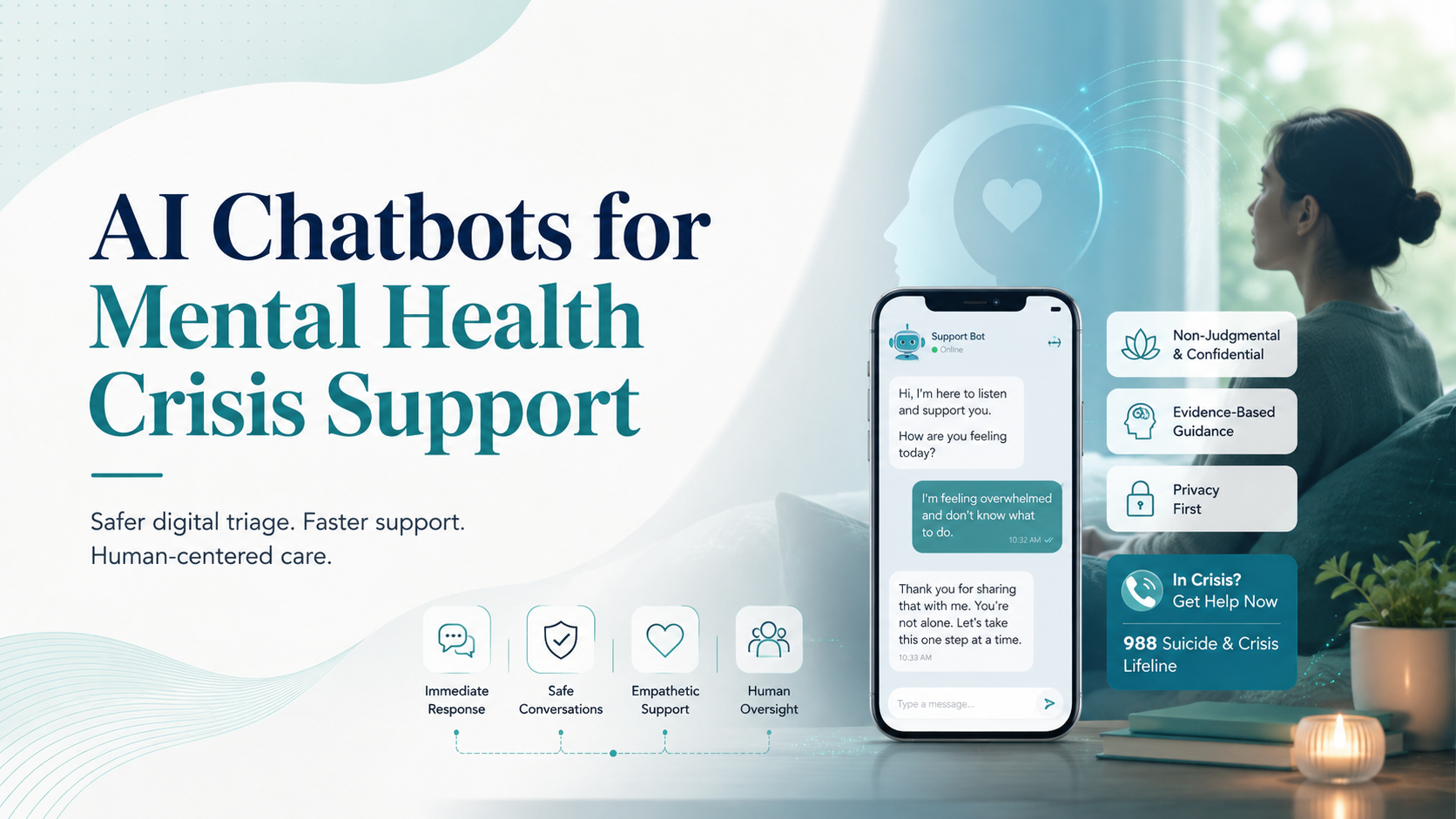
Mental health support is becoming a boardroom issue, not only a healthcare issue. Employers, insurers, education providers, NGOs, wellness platforms, and public-facing service brands are all under pressure to respond faster, communicate more responsibly, and reduce friction for people seeking help. This is where **AI Chatbots for Mental Health Crisis Support** enter the conversation: not as a replacement for trained professionals, but as a digital response layer that can guide, triage, escalate, and keep users engaged during moments of distress.
For Malaysian business owners and marketing teams, the opportunity must be viewed carefully. Mental health is a high-trust category. A chatbot that sounds helpful but gives unsafe advice can damage users, brand reputation, and regulatory confidence. A chatbot that is designed well, however, can support earlier intervention, improve service accessibility, and create a more structured path from first contact to human assistance.
Blackstone Consultancy would analyse **AI Chatbots for Mental Health Crisis Support** from a strategic growth perspective rather than treating the topic as a technology trend. The key question is not "Can we build a chatbot?" but "Where does conversational AI create measurable value without increasing risk?" That means examining the customer journey, the organisation's duty of care, the escalation model, data governance, brand tone, and the operational capacity of the human team behind the system.
In Malaysia, this also requires cultural and language sensitivity. Users may communicate distress in English, Bahasa Malaysia, Mandarin, Tamil, or mixed-language patterns. Some may avoid direct statements because of stigma, family concerns, or workplace fears. Any serious implementation of **AI Chatbots for Mental Health Crisis Support** must therefore be built around careful conversation design, clear safety boundaries, and fast routing to appropriate human or emergency support when needed.
From a commercial standpoint, the strongest use cases are usually not dramatic "AI therapist" concepts. They are practical applications: intake screening, appointment guidance, after-hours support, employee wellbeing navigation, resource matching, crisis escalation, and follow-up reminders. These functions can strengthen trust while helping organisations manage demand more consistently.
For marketing teams, **AI Chatbots for Mental Health Crisis Support** also require a different content strategy. The messaging should avoid hype, miracle claims, or emotional manipulation. Instead, it should communicate reliability, privacy, accessibility, and the limits of the tool. In sensitive sectors, trust is built through clarity. This is where structured SEO services matter, because sensitive pages need intent mapping, safe wording, and clear next steps before they compete for search demand.
The businesses that benefit most will be those that treat **AI Chatbots for Mental Health Crisis Support** as part of a broader service ecosystem: human-led, ethically governed, locally relevant, and aligned with long-term brand credibility.
What The Market Is Really Responding To
The interest in **the brand** is not driven by technology curiosity alone. It reflects a wider shift in how people seek help, how organisations manage risk, and how brands are expected to respond when audiences are under emotional pressure.
Customers Want Faster, Lower-Friction Support
In Malaysia, many users still hesitate to make a phone call, book a counselling session, or speak openly about emotional distress. A chatbot can feel less intimidating because it is private, immediate, and available without a formal appointment. This does not replace professional care, but it does change the first point of contact.
For healthcare providers, insurers, universities, employers, NGOs, and community platforms, the market signal is clear: people increasingly expect support channels that are accessible before a situation escalates. **the market example** are being evaluated because they can help triage, guide, and route users more consistently when designed responsibly.
Brand Trust Depends On Tone And Boundaries
This category is sensitive. A brand that presents automation as a complete solution can quickly lose credibility. Users want reassurance that the system is safe, respectful, and connected to human escalation when needed.
Marketing teams should therefore avoid overpromising. The strongest brand positioning is not "AI replaces counsellors," but "AI helps people reach the right support faster." This distinction matters commercially because trust is the real conversion driver. If the message feels careless, users may disengage even before testing the service.
Commercial Intent Is Coming From Risk-Aware Organisations
Search and enquiry behaviour around **the operator** often comes from decision-makers trying to solve operational pressure: after-hours response, staff wellbeing, student support, call-centre load, or early intervention. These buyers are not only comparing features. They are assessing governance, compliance, data handling, escalation logic, and whether the vendor understands the emotional weight of the use case.
For Malaysian businesses, this means content must speak to both care and control. A useful page should explain where automation helps, where human professionals remain essential, and how the chatbot experience is monitored.
The Marketing Opportunity Is Education, Not Hype
Brands entering this space need clear messaging across search, website content, and social channels. A capable social media crisis-response content team can help translate a complex service into responsible public communication without making it sound cold or opportunistic.
The market is responding to **the company** because the need is real, but the winning brands will be those that communicate safety, empathy, and operational readiness. In this category, **this business** must be positioned as a support layer, not a shortcut.
The Strategic Pattern Beneath The Surface
The commercial lesson behind **the brand** is not only about healthcare technology. It shows how a sensitive, high-intent topic becomes a strategic market signal when positioning, content, offer design, and conversion pathways are aligned.
1. Positioning Must Reduce Risk Before It Sells
In crisis-related categories, the audience is not looking for novelty. They are looking for safety, clarity, and responsible guidance. This changes the role of positioning. A brand cannot simply say it uses AI. It must explain what the system is designed to do, what it will not do, when human escalation is required, and how privacy is handled.
For Malaysian businesses, the broader point is clear: in complex or regulated categories, trust is built by defining boundaries. The sharper the promise, the more important the safeguards become.
2. Offer Design Should Match Real User Anxiety
The demand around **the market example** reflects a practical need: people want immediate, private, low-friction access to support. That does not mean the chatbot replaces professionals. It means the offer must be designed around the first moment of need.
This pattern applies beyond mental health. The same first-response logic appears in employee communication chatbot systems, online education chatbot support, chatbot-led user journey analysis, and crisis communication chatbot planning. Whether the business is in education, legal services, logistics, healthcare, insurance, or public-sector support, the best AI offers often begin by reducing waiting time, organising questions, triaging urgency, and guiding users to the next right step.
3. Content Must Answer The Questions Buyers Are Afraid To Ask
Search demand in sensitive categories is rarely casual. Users may search because they are worried, confused, or evaluating risk on behalf of an organisation. Content around **the operator** therefore needs to answer operational questions, not only technical ones: Who supervises it? What happens in an emergency? Is data stored? Can the system misunderstand intent? What are the escalation protocols?
For marketing teams, this means strong insight content should not over-polish the message. It should address objections directly. A trust-first web design structure can reinforce that by placing safety limits, escalation notes, FAQs, and enquiry paths where cautious readers expect them.
4. Conversion Behaviour Follows Confidence
A visitor reading about **this business** may not convert immediately. The topic requires internal discussion, compliance review, management approval, and operational planning. This makes soft conversion points important: downloadable frameworks, consultation requests, readiness assessments, or stakeholder briefing materials.
The deeper pattern is that high-trust AI markets do not convert through hype. They convert through confidence. **the company** is a useful example because it forces businesses to think beyond traffic and ask the harder question: does our content help the buyer make a responsible decision?
Audience, Message, And Channel Fit
The market for **the brand** is not one audience. It usually includes decision-makers, risk owners, frontline teams, and the public users who may eventually interact with the tool. For Malaysian organisations, the communication strategy must separate these groups clearly. A message that reassures a hospital administrator may not convince a university counsellor, HR director, or government stakeholder.
Segment By Urgency, Risk, And Trust
Problem-aware buyers are often reacting to pressure: rising demand for support, limited human availability, after-hours enquiries, or the need to triage sensitive conversations more consistently. They need a practical explanation of where **the market example** can assist, and where human intervention remains essential.
Comparison-stage buyers are more cautious. They will ask about escalation logic, safeguarding, multilingual capability, data handling, audit trails, and integration with existing teams. For this group, the message should avoid hype. It should show governance, workflow design, and responsible implementation.
Existing customers or internal departments may need reassurance that the chatbot is not replacing care professionals. The strongest message is operational: faster routing, clearer intake, better documentation, and reduced burden on teams handling repetitive first-response conversations.
Internal stakeholders such as legal, compliance, IT, and leadership need a different proof set. They want to understand liability, privacy, approval processes, and how the system behaves when uncertainty or crisis indicators appear.
Match The Message To The Decision Stage
At the awareness stage, content should define the problem without sensationalising it. Articles, executive explainers, and sector-specific briefings can help buyers understand how **the operator** fit into broader support systems.
At the consideration stage, buyers need comparison assets: use-case maps, risk checklists, workflow diagrams, and policy-aligned implementation notes. This is where marketing teams should be precise about limitations, escalation points, and human oversight.
At the decision stage, channels should become more direct. Workshops, stakeholder presentations, procurement documents, and pilot scoping sessions are more useful than broad campaign content. For **this business**, trust is built through clarity, not aggressive promotion.
Choose Channels That Support Confidence
LinkedIn can reach business, education, healthcare, and public-sector leaders with thought leadership and implementation guidance. Search content can capture buyers actively researching solution models; teams serving the capital may need SEO visibility for Kuala Lumpur decision-makers, while providers covering wider state markets can build Selangor search coverage for high-intent enquiries. Webinars can help cross-functional teams discuss concerns in one setting. Email works well for nurturing committees that require repeated reassurance before approval.
For Malaysian businesses, the channel plan should also consider language, cultural expectations, and the sensitivity of mental health conversations. **the company** must be positioned as a responsible support layer, not a standalone promise.
What Malaysian Businesses Can Apply
The lesson from the brand is not limited to healthcare providers. Malaysian brands, agencies, and marketing teams can apply the same principles of speed, empathy, escalation, and trust to their customer-facing communications.
Build response systems, not just content calendars
Social media teams often plan campaigns, captions, and paid media, but crisis-sensitive conversations usually happen in comments, DMs, reviews, and WhatsApp threads. If your brand handles finance, education, wellness, insurance, recruitment, property, or public services, you need clear rules for what happens when a user sounds distressed, angry, confused, or vulnerable.
When a campaign discusses the market example, the practical takeaway is to define response pathways before automation is deployed. Decide which questions can be answered by AI, which require a trained customer service agent, and which must be escalated immediately to a qualified professional or internal decision-maker.
Train for tone, context, and local language
In Malaysia, digital communication rarely happens in one language or one cultural style. A user may switch between English, Bahasa Malaysia, Mandarin, Tamil, slang, emojis, or abbreviated phrases. Marketing automation should not only recognise keywords; it should be guided by tone, intent, and context.
Any pilot involving the operator should remind businesses that sensitive automation must be carefully scripted, reviewed, and monitored. The same applies to brand chatbots used for complaints, refunds, student enquiries, medical appointments, or public-facing campaigns; teams can compare the trust logic with online brand loyalty chatbot journeys and skill assessment chatbot workflows. A technically correct answer can still damage trust if it feels cold, dismissive, or overly promotional.
Align AI, social media, and digital marketing governance
For agencies and in-house teams, this is where SaaS-style application workflows become more than a technical build. Paid ads, landing pages, chatbot flows, CRM follow-ups, and social media replies should be managed as one connected experience. If the ad promises help, the chatbot must not create friction. If the chatbot collects information, the follow-up must be timely and appropriate.
Content around this business also shows why Malaysian businesses should document approval processes. Who signs off chatbot scripts? Who reviews sensitive keywords? Who handles after-hours escalation? Who audits the conversation logs for quality and risk?
Used responsibly, the company can inspire better commercial systems: faster first replies, clearer triage, more humane automation, and stronger brand protection. The opportunity is not to replace people, but to ensure people are supported by tools that know when to assist, when to pause, and when to escalate.
Measurement That Keeps The Strategy Honest
For **the brand**, measurement cannot stop at traffic, impressions, or demo requests. The subject carries reputational, ethical, and operational risk, so the strategy must be tested against intent, trust, user experience, and internal readiness.
Search Signals: Are We Matching The Right Intent?
Start by separating informational, commercial, and urgent-support intent. A Malaysian healthcare provider, insurer, university, employer, or NGO should know whether visitors are searching for education, vendor evaluation, policy guidance, or immediate help. Track rankings and clicks, but also review the queries themselves. If the content attracts people in acute distress, the page must clearly route them to appropriate emergency or human support pathways.
For **the market example**, useful search measurement includes keyword visibility, featured snippet presence, branded search growth, assisted conversions, and the quality of landing pages that users enter from Google.
Engagement Quality: Do Visitors Trust The Page?
Engagement should be judged by behaviour, not vanity. Look at scroll depth, time on key sections, clicks on safety explanations, FAQ expansion, contact form starts, and exits after risk-related content. A short visit is not always bad if the visitor quickly finds a crisis hotline, policy answer, or escalation pathway.
For **the operator**, strong engagement often comes from clarity: what the chatbot can do, what it must not do, when humans intervene, how data is handled, and who is accountable.
Lead Quality: Are The Right Buyers Responding?
Marketing teams should score leads by sector fit, urgency, budget readiness, compliance expectations, and decision-making role. A large number of vague enquiries may be less valuable than a smaller number from hospitals, employee assistance providers, education groups, or public-sector teams with defined governance needs.
For **this business**, lead forms should capture context carefully: intended users, escalation requirements, languages, reporting needs, and whether the buyer expects clinical, wellbeing, HR, or customer-service support.
Operational Signals: Can The Promise Be Delivered?
Measure response accuracy reviews, escalation handoff quality, unresolved conversation patterns, complaint themes, data retention checks, and staff workload after launch. Marketing claims must reflect what operations can safely support.
For **the company**, run a monthly review loop between marketing, product, legal, compliance, and frontline teams. Remove weak claims, update pages based on real objections, refine FAQs, and document what changed. That loop keeps the strategy commercially useful without drifting into unsafe overstatement.
Risks, Trade-Offs, And Better Questions
the brand can look impressive in a product demo, but crisis support is not a normal customer-service use case. For Malaysian business owners, healthcare teams, insurers, universities, and public-facing organisations, the bigger question is not "Can we build one?" It is "Should this interaction be automated, and under what limits?"
Mistakes To Avoid Before Copying A Visible Tactic
Do not copy a chatbot flow simply because a global platform has launched something similar. Their risk tolerance, clinical governance, legal review, and escalation infrastructure may be very different from yours.
A few common mistakes deserve attention:
- Treating sensitive distress signals like ordinary FAQs
- Using warm language without real escalation pathways
- Overpromising availability, safety, or clinical accuracy
- Launching before human supervisors understand how the system behaves
- Measuring success only by engagement, conversation volume, or cost reduction
the market example should not be judged like a lead-generation bot. Longer conversations are not always better. Deflection is not always success. A user who needs urgent help may require a fast handover, not a more "empathetic" response.
Better Questions For Commercial Teams
Before approving budget, ask what problem the chatbot is genuinely solving. Is it helping users find the right resource faster? Is it triaging non-emergency enquiries? Is it supporting staff after hours with carefully limited guidance? Each answer leads to a different design.
Teams should also ask:
- Who owns the risk when the chatbot gives an unsafe response?
- What topics are out of scope?
- When must the system stop responding and escalate?
- How will local languages, cultural context, and Malaysian support pathways be handled?
- What evidence will be reviewed before expanding the use case?
the operator require clear boundaries. A commercially grounded strategy may start smaller: internal staff wellbeing navigation, appointment routing, or resource discovery, rather than direct crisis intervention.
Stay Grounded In Value, Not Hype
The best business case is rarely "AI will replace human support." A stronger case is that the system improves access, consistency, routing, and documentation while keeping humans involved where judgement matters.
this business should be tested against realistic failure scenarios, not only ideal user journeys. If the system cannot safely handle ambiguity, distress, slang, multilingual input, or silence, the rollout plan needs revision.
For many organisations, the right move is staged deployment: define the safe scope, build escalation rules, review conversations, train staff, and only then expand. the company may become valuable, but only when compassion, governance, and commercial discipline are designed together.
A Practical Roadmap For Turning The Insight Into Action
The lesson from **the brand** is not that every business should build a crisis tool. It is that customers increasingly expect faster responses, clearer triage, safer escalation, and more human-aware digital experiences. Malaysian leadership and marketing teams can use this insight as a planning model for the next cycle.
1. Start With The Customer Moment
List the points where your audience feels uncertainty, urgency, embarrassment, confusion, or risk. This could be a healthcare enquiry, financial concern, education decision, legal intake, property purchase, or service complaint. The question is simple: where does a delayed or generic response create friction?
Use the principles behind **the market example** to examine whether your existing digital touchpoints recognise context, ask the right next question, and know when to hand over to a human.
2. Map The Operating Rules Before The Technology
Before choosing any platform, define the boundaries. What can an automated system answer? What must it never answer? What language should it use? When should it escalate? Who receives the handover? How quickly must the team respond?
For Malaysian businesses, this should also include internal approval from compliance, operations, customer service, and brand owners. The strongest implementations are not just "smart"; they are governed.
3. Convert The Insight Into Content Strategy
Your marketing team can apply the same logic to content planning. Build pages, FAQs, videos, and chatbot flows around high-intent questions, not only promotional messages. If users are anxious or undecided, they need clarity before persuasion.
This is where the thinking behind **the operator** becomes commercially useful: design content that supports decision-making, reduces confusion, and creates a smoother path to enquiry.
4. Pilot, Measure, And Improve
Run a controlled pilot with one customer journey. Track practical indicators: completion rates, unanswered questions, escalation quality, response time, user feedback, and sales or enquiry progression. Do not measure only traffic. Measure whether the system improves the next decision for both the customer and your team.
If your brand operates in a sensitive sector, review transcripts regularly and refine wording with care. **this business** shows why tone, timing, and escalation matter as much as automation.
5. Build A Quarterly Review Rhythm
Turn this into a leadership habit. Every quarter, review one customer journey and ask: what changed in customer behaviour, what did our data reveal, and what should we improve next?
The practical value of **the company** is the management discipline it encourages: observe real behaviour, define responsible systems, and turn insight into better service, stronger content, and more trusted digital experiences.