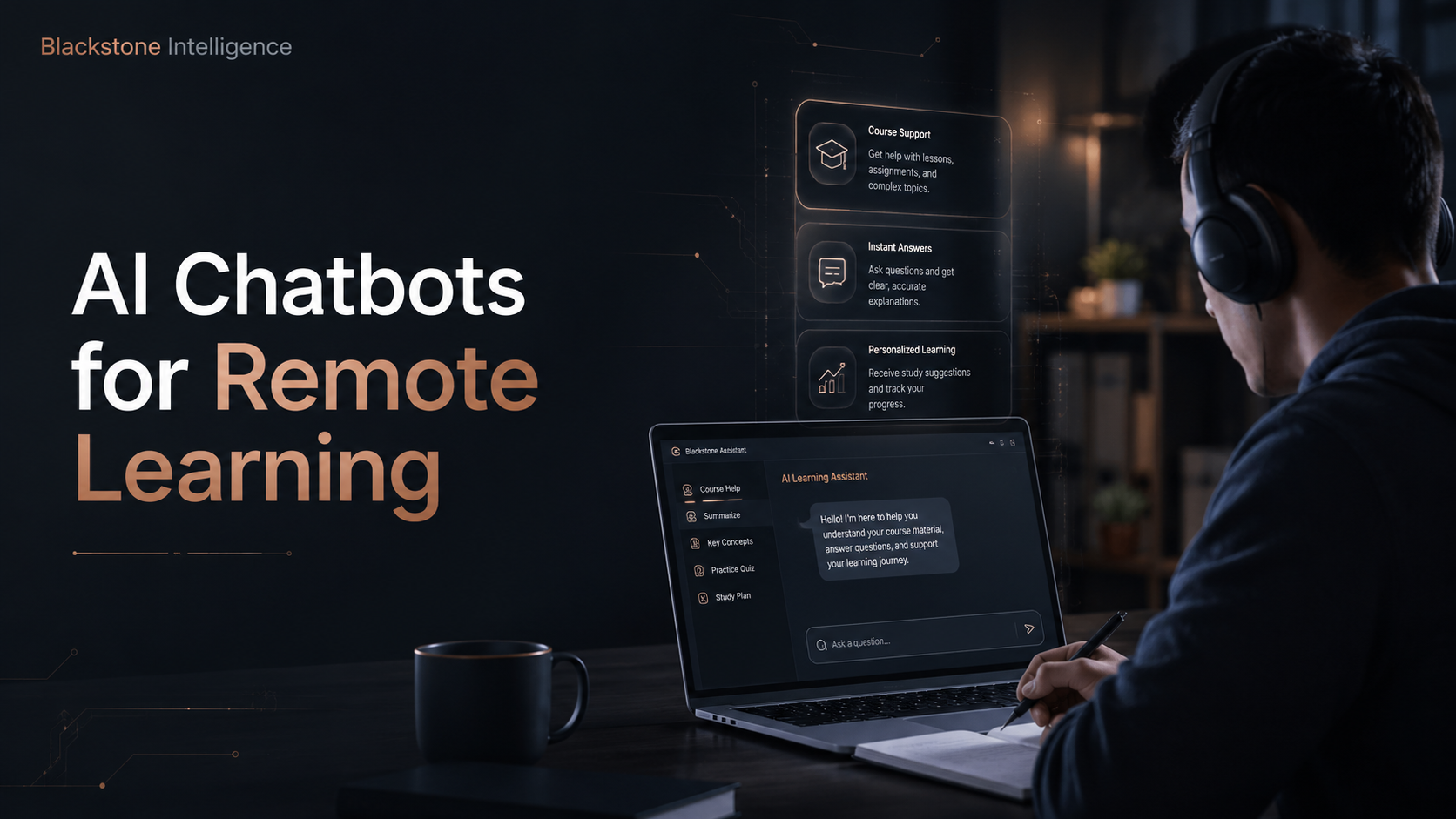
Remote learning is no longer a temporary substitute for the classroom. For Malaysian businesses, education providers, training companies, HR teams, and digital product owners, it has become a channel for scale, retention, and customer experience. The next phase is not simply about putting course materials online. It is about making digital learning more responsive, guided, and commercially sustainable.
**AI Chatbots for Remote Learning** matter now because learners expect immediate answers, personalised support, and flexible access across devices. Whether the audience is a university student, a professional learner, a franchise trainee, or a customer learning how to use a product, delayed support often leads to disengagement. A well-designed chatbot can help reduce friction by answering routine questions, guiding users through modules, prompting next steps, and escalating complex issues to human staff when needed.
From a business perspective, the opportunity is not "automation for its own sake". The real value comes from identifying where learning journeys break down and where intelligent support can improve completion, satisfaction, and operational efficiency. For example, a training provider may need to reduce repetitive admin enquiries. A corporate learning team may want to help employees apply new knowledge faster. A software company may use guided learning to improve onboarding and reduce support dependency. Each case requires a different strategic approach.
At Blackstone Consultancy, we would analyse this topic through a growth lens. That means looking beyond the chatbot feature and assessing the full ecosystem: target audience behaviour, content structure, user intent, platform readiness, data governance, brand positioning, and measurable business outcomes. A chatbot should support the learning experience, but it should also align with commercial goals such as lead nurturing, customer education, retention, upselling, or workforce productivity.
For Malaysian organisations, localisation is also important. Language preferences, cultural context, regulatory expectations, and varying levels of digital maturity all affect adoption. A chatbot that works well in one market or institution may not automatically work in another. The strategy must account for how users actually ask questions, where they drop off, and what kind of reassurance they need before trusting automated guidance.
This insight explores how intelligent chatbots are reshaping remote education and training, not as a replacement for educators, trainers, or support teams, but as a practical layer that can make digital learning more accessible, scalable, and commercially effective when implemented with clear objectives.
What The Market Is Really Responding To
The demand for **AI Chatbots for Remote Learning** is not driven by novelty alone. Buyers are responding to a practical gap: learners expect faster support, institutions need scalable engagement, and education brands are under pressure to prove that online learning can feel guided rather than passive.
For Malaysian education providers, training companies, HR teams, and digital course brands, the market signal is clear. People are no longer satisfied with recorded lessons and a basic helpdesk. They want instant clarification, personalised study support, reminders, feedback, and a sense that someone is "there" when they get stuck.
Customer Behaviour Is Moving Toward Always-On Learning Support
Remote learners often study outside office hours, between work shifts, after school, or during weekends. This changes their expectations. If a learner has a question at 10pm, waiting until the next working day may reduce momentum or increase drop-off risk.
This is where chatbot-enabled support becomes commercially relevant. It can help answer routine questions, guide learners to the right module, explain assignment requirements, and reduce repetitive administrative enquiries. The strongest market response is coming from customers who value convenience, speed, and confidence before they commit to a programme.
For marketing teams, this affects the entire buyer journey. A responsive learning experience is no longer just an operational feature; it can become part of the brand promise.
Category Signals: From "Online Course" To "Supported Digital Learning"
The category is shifting. Many providers can offer video lessons, downloadable materials, and online assessments. Fewer can convincingly communicate structured support at scale.
This is why chatbot adoption is becoming a brand differentiation signal. It suggests that the provider is investing in learner experience, not just content delivery. However, businesses must be careful not to overposition the technology. The market will not reward vague claims about "AI-powered education" unless the benefit is specific and easy to understand.
Clear messaging matters. Examples include faster learner onboarding, guided revision, multilingual assistance, course navigation, or automated FAQ handling. These are practical benefits that business owners, parents, students, and corporate training buyers can evaluate.
Brand Perception And Commercial Intent
A chatbot can improve perception when it supports trust, clarity, and service quality. It can damage perception when it feels generic, inaccurate, or disconnected from the actual learning journey.
Commercial intent is strongest when the technology is linked to measurable business concerns: enquiry conversion, learner retention, support workload, course completion, and customer satisfaction. Education brands should therefore avoid treating chatbots as a standalone gimmick. They should be integrated into content strategy, landing pages, CRM workflows, and post-enrolment communication.
For institutions promoting remote learning programmes, the opportunity is not only technical. It is also strategic. Working with a performance-focused social media agency can help translate these capabilities into messages that attract the right learners, reduce hesitation, and position the brand as modern without sounding superficial.
The Strategic Pattern Beneath The Surface
The visible story is that education providers are adopting smarter digital tools. The more important commercial story is that buyers are no longer evaluating remote learning only by platform features, course content, or price. They are looking for confidence: faster learner support, clearer progress visibility, and a learning experience that feels guided rather than abandoned.
For Malaysian training companies, universities, enrichment centres, HR teams, and education technology brands, this changes how the offer must be positioned.
Positioning Moves From "Online Access" To "Learning Assurance"
Remote learning used to be sold around convenience: learn anywhere, join from home, access recorded materials. That is now expected. The stronger positioning angle is assurance.
Can the learner get help when they are stuck? Can the parent, manager, or sponsor see whether progress is happening? Can the provider reduce drop-off before it becomes a refund request, complaint, or silent disengagement?
This is where AI Chatbots for Remote Learning become strategically relevant. They are not simply a support widget. They represent a shift from passive content delivery to active learner guidance.
Offer Design Must Match The Buyer's Real Risk
Different buyers care about different outcomes. A parent may worry about whether a child is keeping up. An HR manager may worry about completion rates and post-training application. A university department may worry about student support capacity. A professional training provider may worry about differentiation in a crowded market.
The offer should therefore be designed around the risk being reduced, not the technology being used. For example, "24/7 learner assistance", "guided revision support", "course navigation help", or "progress check-ins" are easier for buyers to understand than technical descriptions of conversational AI.
Search Demand Signals A More Educated Market
Search behaviour around this topic suggests that users are not only asking what chatbots are. They are comparing use cases, implementation options, benefits, limitations, and future relevance. That means content should not stay at a basic awareness level.
A strong content strategy should cover decision-stage questions: what to automate, what not to automate, how to protect learner trust, how to integrate with existing learning platforms, and how to measure whether the chatbot is improving the learning experience.
Conversion Behaviour Depends On Trust
The final pattern is conversion. Buyers will not move forward just because the technology sounds advanced. They need a clear operational case, a low-risk starting point, and evidence that the solution fits their learners.
The practical next step is to define one learning friction point, one target audience, and one measurable improvement before building anything bigger. That keeps the strategy commercial, not experimental.
Audience, Message, And Channel Fit
A strong go-to-market plan for AI Chatbots for Remote Learning should not treat "education buyers" as one audience. In Malaysia, the decision may involve school owners, training providers, HR leaders, university teams, parents, teachers, IT managers, and learners themselves. Each group pays attention to different risks and rewards.
Segment The Audience By Decision Role
For business owners and senior management, the message should focus on commercial value: learner retention, support efficiency, programme scalability, and differentiation in a competitive education market. They do not need technical jargon first; they need to understand whether the investment supports growth and protects service quality.
For academic leaders and trainers, the message must address learning outcomes, content accuracy, assessment support, and how the chatbot fits into existing teaching methods. This audience will be cautious if the solution appears to replace educators rather than support them.
For IT and operations teams, the key concerns are integration, data handling, platform reliability, user access, and maintenance. They need clearer documentation, realistic implementation timelines, and evidence that the system can work with existing learning management systems or communication tools.
For learners and parents, the message should be simple: faster help, clearer guidance, more flexible study support, and less waiting when questions arise. Avoid overpromising "personal tutors for everyone" unless the system can genuinely deliver that experience.
Match The Message To The Buying Stage
Problem-aware buyers need educational content. They may be searching because their remote learners are disengaged, support teams are overloaded, or trainers cannot respond quickly after class. Blog articles, LinkedIn posts, webinars, and explainer videos can help frame the issue and introduce possible solutions.
Comparison-stage buyers need proof and clarity. They want to know what features matter, what implementation requires, and how different chatbot models affect cost, control, and performance. Use comparison guides, product demos, FAQs, consultation calls, and proposal documents to reduce uncertainty.
Existing customers need adoption support. Even a well-built chatbot can underperform if learners do not know when to use it. Email onboarding, in-platform prompts, trainer briefing notes, and short usage guides can improve take-up.
Internal stakeholders need confidence before approval. Use concise business cases, risk summaries, pilot plans, and governance notes. The strongest channel here is often not public marketing, but structured sales enablement that helps champions explain the opportunity internally.
What Malaysian Businesses Can Apply
Remote learning trends are not limited to schools and universities. The same chatbot capabilities shaping digital classrooms can help Malaysian businesses educate customers, train teams, qualify leads, and support communities at scale. For marketing teams, the opportunity is to treat learning as part of the buyer journey, not as a separate training function.
Turn Customer Education Into a Marketing Asset
Many Malaysian businesses already publish FAQs, product guides, social posts, and short videos. The next step is to organise that knowledge into guided, interactive conversations. A chatbot can help users compare service options, understand pricing factors, prepare documents, or learn how to use a product before speaking to sales.
For sectors such as property, healthcare, finance, education, professional services, and B2B solutions, this can reduce repetitive enquiries while improving lead quality. The key is not to make the bot "sound clever", but to ensure it gives clear next steps, captures intent, and knows when to route the user to a human team.
Use Social Media as the Entry Point
In Malaysia, many customer journeys begin on Facebook, Instagram, TikTok, LinkedIn, or WhatsApp rather than on a website. Businesses can apply the lessons from AI Chatbots for Remote Learning by using social channels to invite micro-learning interactions: "Find the right package", "Check your eligibility", "Learn which solution fits your business", or "Get a step-by-step guide".
This is where a social media agency or digital marketing partner can add value. The chatbot should not sit in isolation. It needs to connect with campaign messaging, landing pages, retargeting audiences, CRM follow-up, and content planning.
Build Content for Conversations, Not Just Rankings
Search content is still important, but businesses should start structuring content so it can be reused by chatbots. That means creating clear service explanations, objection-handling answers, comparison pages, checklists, and short educational scripts. These assets can support SEO, paid ads, chatbot flows, and sales enablement at the same time.
A practical approach is to audit the questions your sales and customer service teams answer every week. Prioritise the questions that influence purchase decisions, cause delays, or require repeated explanation. Then convert them into concise chatbot responses with links to deeper content where needed.
Keep Governance and Human Oversight in Place
Businesses should avoid launching chatbots without controls. Review the answers regularly, set boundaries for sensitive topics, protect customer data, and make escalation to staff simple. In multilingual Malaysia, also consider whether responses need to support Bahasa Malaysia, English, Mandarin, or Tamil depending on the audience.
The commercial goal is straightforward: use intelligent assistance to educate faster, guide prospects better, and make every marketing touchpoint more useful.
Measurement That Keeps The Strategy Honest
A remote learning chatbot should not be judged only by whether it "works" technically. For Malaysian education providers, training companies, and corporate academies, the more important question is whether it improves learner confidence, reduces avoidable support work, and helps the business attract better-fit enquiries. Measurement keeps the strategy grounded.
Start With Search Signals
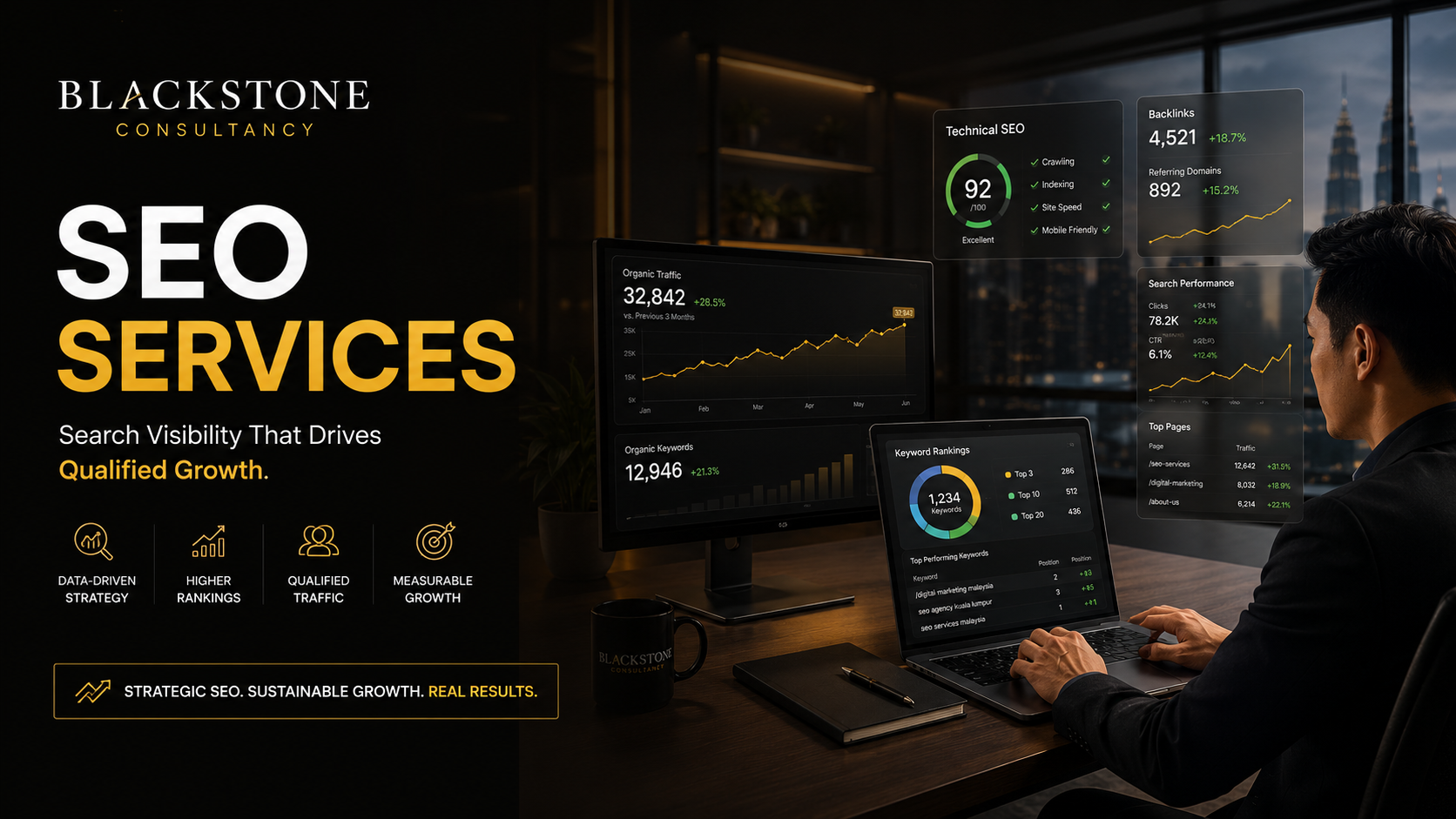
Search data shows whether the market understands and wants the solution. Track the queries that bring visitors to chatbot-related pages, including informational searches, comparison searches, and high-intent phrases such as pricing, implementation, LMS integration, or enterprise training support. For a page targeting **AI Chatbots for Remote Learning**, rankings matter, but the better signal is whether the right audience is clicking, staying, and moving deeper into the site.
Marketing teams should also review Search Console queries for mismatch. If the page attracts students looking for free tools but the business sells managed learning solutions, the content may need clearer positioning.
Measure Engagement Quality, Not Just Traffic
Traffic volume can be misleading. A useful measurement framework should include scroll depth, time on key sections, clicks on demos or contact buttons, downloads, and return visits. For longer decision cycles, returning visitors are especially important because education technology buyers often compare vendors, discuss internally, and revisit before making contact.
Chatbot-specific engagement should be measured too. Look at completed conversations, abandoned flows, repeated questions, escalation requests, and sentiment within support transcripts where appropriate. If users repeatedly ask the same question after reading the page, the content or bot response may be unclear.
Connect Leads To Commercial Fit
Not every lead is valuable. Track whether enquiries come from schools, universities, HR teams, training providers, or individual learners, and compare that against the target customer profile. Useful lead-quality indicators include budget readiness, urgency, integration needs, number of learners, decision-maker involvement, and whether the enquiry references a specific use case.
Sales and marketing should review these patterns together. If many leads are curious but not ready, the page may need stronger qualification language, clearer implementation expectations, or better examples of suitable use cases.
Watch Operational Signals
Once deployed, operational data becomes essential. Monitor response accuracy, unresolved queries, handover speed, uptime, user complaints, and content maintenance workload. A chatbot that reduces simple enquiries but creates complex clean-up work may not be delivering true efficiency.
Build A Repeatable Review Loop
Set a monthly or quarterly review rhythm. Compare search performance, engagement behaviour, lead quality, and operational feedback in one discussion. Then decide what to refine: page copy, chatbot scripts, FAQs, sales qualification, or internal processes. The best strategies are not fixed; they improve as real users reveal what they need.
Risks, Trade-Offs, And Better Questions
The excitement around AI Chatbots for Remote Learning can make every new feature look like a strategic advantage. In practice, the strongest teams are not the ones that copy the most visible tactics. They are the ones that ask harder commercial, operational, and ethical questions before committing budget.
Do Not Confuse Novelty With Learning Value
A chatbot that answers quickly is not automatically useful. If the responses are shallow, misaligned with the syllabus, or disconnected from learner goals, it may increase activity while reducing understanding. Malaysian education providers, training companies, and corporate learning teams should avoid building around features alone: voice, avatars, emotional tone, or multiagent workflows only matter if they improve completion, comprehension, support efficiency, or learner confidence.
Before adopting a trend, ask: what specific learning friction are we removing? Is it after-hours support, revision guidance, language accessibility, onboarding, assessment preparation, or tutor workload? Without a clear use case, the tool becomes another platform to manage.
Question What You Are Copying
Visible tactics from large education brands may not fit your audience, budget, or compliance environment. A university-scale chatbot may require content governance, integration, escalation rules, multilingual support, and academic oversight that a smaller training provider cannot sustain. Similarly, a corporate learning bot for internal staff may need different safeguards from a public-facing student assistant.
Teams should also examine whether the tactic depends on data they do not have. Personalised recommendations, predictive support, and emotional response features require careful data handling. If the inputs are weak, the output will be unreliable. If consent and privacy expectations are unclear, the reputational risk may outweigh the convenience.
Stay Commercially Grounded
A responsible chatbot strategy needs a business case, not just a technology case. Define the cost of current learner support, the value of faster responses, the risk of inaccurate guidance, and the internal effort needed to maintain content. Someone must own updates, review sensitive answers, and decide when the bot should hand over to a human.
The better questions are often simple: Will this reduce repetitive workload? Will learners trust it? Can we audit its answers? Can it support Bahasa Malaysia, English, or other required languages properly? What happens when it is wrong?
The goal is not to avoid innovation. It is to make sure innovation strengthens the learning model instead of distracting from it.
A Practical Roadmap For Turning The Insight Into Action
For Malaysian business owners and marketing teams, the lesson from AI Chatbots for Remote Learning is not limited to education. It shows how customers, students, employees, and buyers are becoming more comfortable with guided digital conversations that respond quickly, explain clearly, and adapt to individual needs. The practical question is: how can your organisation use that behaviour to improve communication, service delivery, and lead nurturing over the next planning cycle?
1. Identify Where Guidance Is Repeated
Start by mapping the questions your team answers again and again. These may come from students, parents, prospects, franchise partners, HR candidates, or existing customers. Look at website enquiries, WhatsApp chats, sales calls, support tickets, and social media comments.
Prioritise areas where people need explanation before they can act. Examples include course selection, onboarding, product comparison, appointment booking, policy clarification, or after-sales support. These are the best places to test conversational support because the value is practical and measurable.
2. Define The Business Outcome Before The Tool
Avoid starting with the technology vendor. First, decide what the chatbot or guided assistant should improve. Is the goal to reduce repetitive enquiries, qualify leads, support remote learners, improve response speed, or help users choose the right package?
Each goal requires different content, workflows, and measurement. A sales-focused bot needs qualification logic. A learning-support bot needs structured knowledge and escalation. A customer service bot needs clear boundaries and handover rules.
3. Build A Minimum Viable Conversation
For the next 60 to 90 days, create a small pilot rather than a full transformation project. Select one audience, one use case, and one channel. Write answers based on approved business knowledge, not assumptions. Include disclaimers where needed, especially for education, finance, healthcare, or legal-related information.
Test the experience internally before going live. Ask whether the conversation is useful, accurate, polite, and easy to complete on mobile devices.
4. Connect Content, Sales, And Operations
A chatbot project should not sit only with IT. Marketing should shape messaging, sales should define lead quality, operations should confirm process accuracy, and leadership should set risk tolerance. Review conversation logs regularly to identify content gaps, confusing offers, and emerging customer needs.
5. Measure, Refine, And Scale Carefully
Track simple indicators: completed conversations, qualified enquiries, common drop-off points, escalation frequency, and user feedback. Use these findings to improve landing pages, FAQs, sales scripts, and training materials.
Once the pilot proves useful, expand by adding more scenarios, languages, or integrations. In Malaysia's multilingual and mobile-first market, the winners will not be those who deploy the most advanced tool first, but those who turn digital conversations into clearer decisions and better customer experiences.