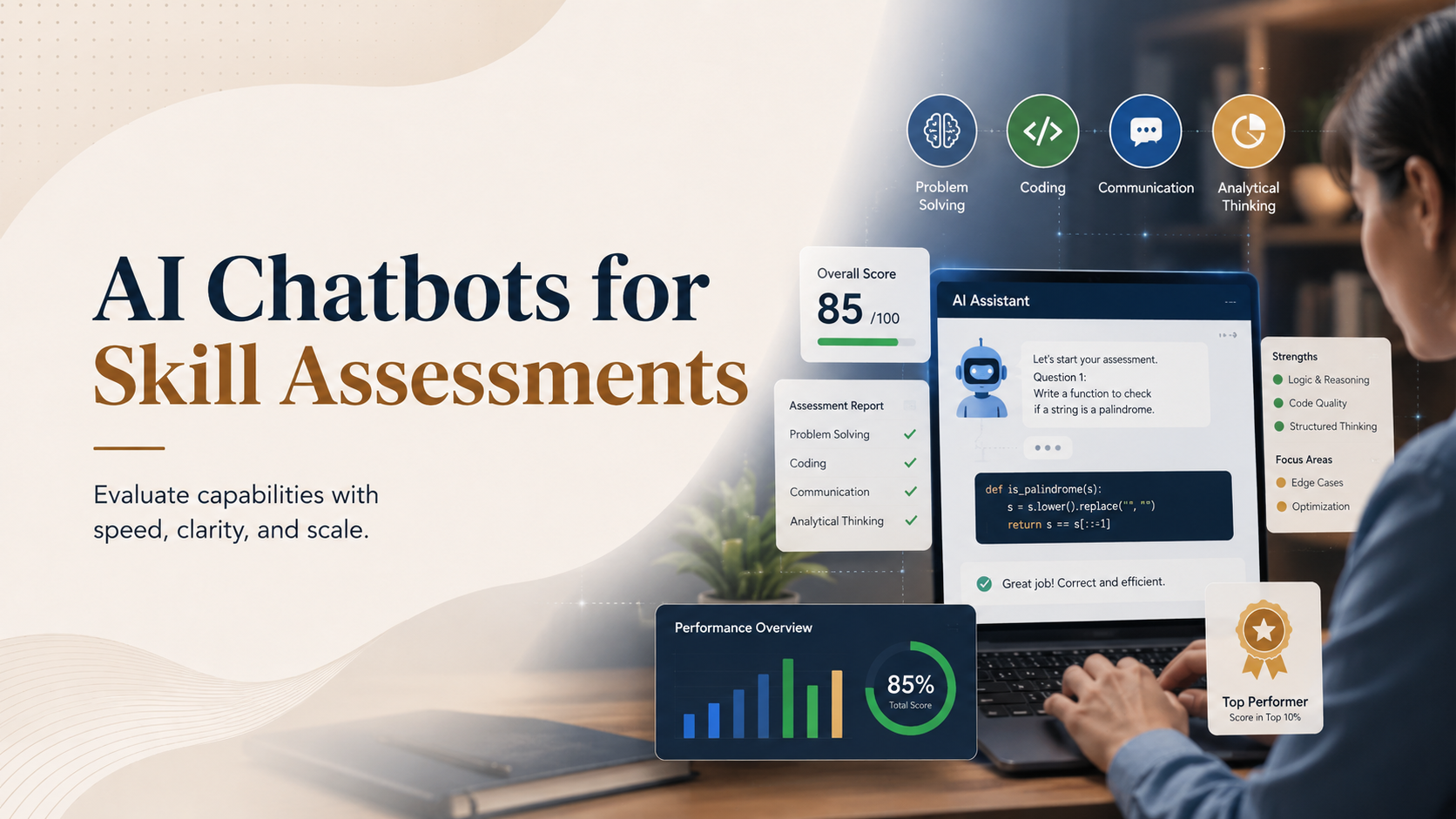
Hiring, promotion, and workforce planning are becoming harder to manage with traditional assessment methods alone. Malaysian businesses are dealing with tighter talent markets, rising salary expectations, hybrid work arrangements, and fast-changing digital skill requirements. At the same time, business owners and marketing leaders need people who can contribute quickly, not just candidates who look suitable on paper.
This is where chatbot-based assessment is becoming commercially relevant. Instead of treating skill evaluation as a one-off test or manual interview process, companies can use conversational systems to screen, question, clarify, and route candidates or employees based on role-specific capabilities. The value is not simply automation. The real opportunity is better decision-making: identifying usable skills earlier, reducing wasted interview time, and spotting capability gaps before they affect growth.
For Malaysian SMEs, enterprises, and fast-scaling teams, the practical question is not whether the technology sounds advanced. The question is whether it improves the quality, speed, and consistency of talent decisions. A chatbot that asks generic questions will add little value. A well-designed assessment flow, however, can help evaluate communication ability, problem-solving approach, product knowledge, sales readiness, technical understanding, or customer service judgement in a more structured way.
From a strategic growth perspective, Blackstone Consultancy would analyse AI Chatbots for Skill Assessments across three commercial areas.
First, the assessment must align with business priorities. A retail group may need to evaluate frontline service behaviour. A B2B company may want to test consultative selling ability. A digital marketing team may need to assess platform knowledge, analytical thinking, and campaign decision-making. The chatbot should be built around the actual competencies that drive revenue, retention, productivity, or customer experience.
Second, the system must support better workflow design. Chatbot assessments should not sit separately from recruitment, onboarding, training, or performance planning. The strongest use cases connect assessment data to the next action: shortlist, interview, train, certify, redeploy, or develop.
Third, governance matters. Malaysian businesses must consider candidate fairness, data handling, language preferences, assessment transparency, and human review. Automation should support judgement, not replace accountability.
The opportunity in 2026 is clear: skill assessment is moving from static forms and subjective interviews toward more adaptive, conversational, and evidence-led evaluation. Companies that approach this strategically can build a more reliable talent pipeline while improving how they identify, develop, and retain the people needed for growth.
What The Market Is Really Responding To
The same demand for guided progress appears in online learning chatbot support models, where learners need help before frustration builds.
The rising interest in **AI Chatbots for Skill Assessments** is not only about automation. It reflects a broader shift in how employers, candidates, and business leaders think about hiring risk, workforce planning, and speed of decision-making.
For Malaysian companies, especially SMEs and mid-market firms, the pressure is practical: hiring needs to be faster, more consistent, and less dependent on manual screening. Teams want to reduce time spent reviewing unsuitable applicants, but they also want to avoid missing capable candidates who may not have conventional qualifications or polished CVs.
Customers Want Better Signals, Not Just More Data
Businesses are already surrounded by candidate data: resumes, LinkedIn profiles, certificates, portfolios, referrals, and interview notes. The problem is that much of this information is uneven, self-reported, or difficult to compare.
This is where the market is showing interest in conversational assessment tools. Employers are looking for clearer signals such as:
- How a candidate explains their thinking
- Whether they can apply knowledge to realistic work scenarios
- How they respond under time pressure
- Whether their claimed experience matches their practical answers
- What training gaps may appear before or after hiring
The demand is not simply for "AI screening". It is for more useful decision support before managers spend time on interviews, onboarding, or role-specific training.
Brand Perception Now Matters In Recruitment Technology
Candidates also judge employers by the way assessments are handled. A clunky, repetitive, or confusing hiring process can make a company look outdated, even if the role itself is attractive.
On the other hand, a structured and responsive assessment experience can strengthen the employer brand. It suggests that the company values clarity, fairness, and professional communication. This matters in competitive hiring environments where skilled candidates may be comparing several employers at once.
Marketing teams should pay attention here. Recruitment experience is part of brand experience. The way a company communicates assessment steps, feedback expectations, privacy handling, and evaluation criteria can influence trust. This is similar to how a strong social media agency helps shape public perception across digital touchpoints; consistency and credibility matter at every stage.
Commercial Intent Is Moving Beyond HR
The buyers exploring these tools are not limited to HR managers. Business owners, operations leads, sales directors, training providers, and department heads are also involved because skills affect delivery, productivity, and customer satisfaction.
The commercial intent behind this topic is therefore broader than recruitment. Companies are asking how they can identify capability earlier, plan training more accurately, and reduce costly mismatches between job requirements and actual performance.
The strongest market response is coming from organisations that see assessment as a business function, not just an administrative task.
The Strategic Pattern Beneath The Surface
Assessment design improves when teams use assessment journey gap analysis to see where users stop, guess, or need feedback.
The rise of **AI Chatbots for Skill Assessments** is not only a HR technology story. It reflects a wider commercial pattern: buyers are becoming more specific, more cautious, and more evidence-driven before they speak to a provider. For Malaysian businesses, this matters because the same pattern affects how talent solutions are positioned, packaged, searched for, compared, and eventually purchased.
From Tool Awareness To Business Relevance
Many companies first notice the technology because it sounds efficient: faster screening, less manual filtering, and more consistent candidate interaction. But efficiency alone is rarely enough to win senior approval. The stronger positioning is tied to business outcomes: reducing hiring bottlenecks, improving role fit, supporting high-volume recruitment, or mapping internal capability gaps.
This changes the marketing message. Instead of presenting a chatbot as a novelty, the offer must explain where it sits in the hiring or workforce planning process. Is it for graduate screening? Technical role validation? Internal mobility? Sales and customer service assessments? The clearer the use case, the easier it is for a buyer to understand the value.
Search Demand Reveals The Buyer's Anxiety
Search behaviour often exposes what decision-makers are unsure about. They are not only looking for "chatbot assessment" as a concept. They want to know whether it is fair, secure, accurate, customisable, and suitable for local hiring realities. They may also compare it against psychometric tests, manual interviews, learning management systems, or applicant tracking tools.
This means content should not stay at the level of broad trend commentary. It needs to answer practical questions: what skills can be assessed, how results are reviewed, how bias is managed, what data is captured, and where human judgement remains necessary. Strong insight content reduces uncertainty before a sales conversation begins.
Conversion Depends On Operational Fit
The final conversion trigger is usually not fascination with AI. It is confidence that the solution can fit into existing workflows without creating extra complexity. Malaysian business owners and marketing teams should therefore treat the offer design as part of the growth strategy.
A useful offer should make adoption feel manageable: clear assessment scope, defined candidate journey, transparent reporting, integration considerations, and a pilot structure that proves value before wider rollout. The strongest commercial pattern is simple: public interest creates traffic, practical content builds trust, and operational clarity turns that trust into enquiry.
Audience, Message, And Channel Fit
Employers can apply employee capability chatbot check-ins when assessment is tied to training, onboarding, or performance support.
For Malaysian businesses evaluating AI Chatbots for Skill Assessments, the buying journey is rarely owned by one person. HR may initiate the conversation, but operations, finance, compliance, IT, and senior leadership often influence whether the solution is tested, funded, and scaled. A strong go-to-market strategy must therefore match the message to the audience's decision role.
Segment The Audience By Decision Pressure
The first segment is **problem-aware HR and talent teams**. They are usually dealing with slow screening, inconsistent interview quality, high applicant volume, or difficulty identifying transferable skills. The message that earns attention here is operational: reduce manual effort, improve consistency, and create a clearer view of candidate capability before the formal interview.
The second segment is **comparison-stage buyers**. These are HR leaders, business owners, or procurement teams already reviewing vendors, platforms, or assessment models. They need practical proof: how the chatbot evaluates skills, what data it captures, how results are reviewed, and where human judgement remains involved. At this stage, vague innovation language is weak. Buyers want process clarity and implementation confidence.
The third segment is **existing customers or internal users**. These may include hiring managers, department heads, or learning and development teams. Their concern is adoption. The message should focus on ease of use, relevance to job roles, and how chatbot-led assessment supports better workforce planning without creating unnecessary administrative burden.
The fourth segment is **internal stakeholders with risk concerns**, especially IT, compliance, legal, and senior management. Their attention is earned through governance: data protection, bias controls, auditability, candidate consent, integration requirements, and escalation rules when the system is unsure.
Match Channels To The Decision Stage
For early awareness, LinkedIn thought leadership, short explainer videos, industry articles, and webinar topics work well because buyers are still framing the problem. The content should highlight common hiring and workforce planning pain points in Malaysia, not immediately push a product demo.
For active evaluation, stronger assets are needed: comparison guides, use-case pages, security notes, implementation checklists, and structured demo sessions. These channels support buyers who must justify the decision internally.
For stakeholder approval, direct consultation, technical documentation, pilot proposals, and executive briefing decks are more effective than broad marketing content. The goal is to reduce perceived risk and show how the solution fits current hiring, training, and compliance processes.
The commercial lesson is simple: different audiences do not buy the same promise. HR wants better assessment flow, leadership wants business value, IT wants control, and candidates want fairness. The strongest strategy respects all four.
What Malaysian Businesses Can Apply
For event-led learning, webinar assessment follow-up bots can turn attendance into clearer evidence of understanding.
For Malaysian companies, the rise of AI Chatbots for Skill Assessments is not only an HR conversation. It also has direct implications for how businesses build marketing teams, select agency partners, and improve campaign execution. In a market where digital roles change quickly, business owners need a clearer way to identify who can actually plan, create, optimise, and report - not just who has the right job title.
Use Skill Assessments Before Expanding Your Marketing Team
Before hiring a social media executive, performance marketer, content strategist, or marketing manager, businesses should define the practical skills required for the role. Instead of relying only on CVs and interviews, use structured assessment questions that test real working ability.
For example, a candidate for a social media role can be asked to review a weak campaign brief, suggest content angles for Malaysian audiences, or explain how they would respond to negative comments on Facebook or TikTok. A performance marketing candidate can be tested on campaign objective selection, budget logic, conversion tracking, and reporting clarity.
The goal is not to make hiring more complicated. It is to reduce the risk of hiring someone who speaks confidently but struggles with execution.
Evaluate Agency Fit More Objectively
The same principle applies when choosing a social media agency or digital marketing partner. Many proposals look polished, but the real question is whether the team understands your business model, customer journey, and commercial priorities.
Malaysian business owners can apply an assessment mindset by asking agencies to respond to realistic scenarios. For example:
- How would you reposition our brand for a younger audience without weakening trust?
- What would you change if our ads were getting clicks but poor enquiries?
- How would you structure content for both Malay and English-speaking segments?
- What metrics would you prioritise during the first three months?
These questions reveal practical thinking, not just presentation quality.
Build Internal Marketing Capability Over Time
AI-driven assessment methods can also help companies identify skill gaps within their existing teams. A marketing executive may be strong in content scheduling but weak in analytics. A designer may understand visual branding but need support in conversion-focused creatives. A business owner may discover that the real gap is not manpower, but strategy, tracking, or campaign discipline.
This allows training budgets to be used more carefully. Instead of sending teams to broad courses, companies can focus on specific capabilities such as Meta Ads structure, short-form video planning, SEO content briefing, CRM follow-up, or monthly reporting.
For Malaysian businesses, the practical lesson is clear: assess marketing capability based on real work, not assumptions. Whether hiring internally or engaging an agency, better evaluation leads to better execution.
Measurement That Keeps The Strategy Honest
For consumer brands, loyalty-building quiz chatbot flows can show whether assessment data is improving engagement or only creating clicks.
A chatbot-led assessment strategy should not be judged only by how advanced the technology appears. For Malaysian employers, training providers, and recruitment teams, the better question is whether the system helps identify stronger-fit candidates, reduces avoidable manual work, and improves decision confidence without damaging trust.
The measurement model should combine marketing, hiring, and operational signals. If the team only tracks form fills or chatbot completions, it may optimise for volume while missing quality.
Search Signals: Is The Market Finding The Right Page?
Start with search visibility, but read it carefully. Track rankings, impressions, and click-through rates for queries related to assessment automation, candidate screening, workforce planning, and skills validation. More importantly, review the intent behind the queries.
A page attracting students looking for free quizzes is very different from one attracting HR leaders comparing assessment platforms. For **AI Chatbots for Skill Assessments**, search performance should be assessed against commercial relevance, not just traffic growth.
Useful checks include:
- Which queries lead to meaningful enquiries?
- Are visitors landing on the right page for their intent?
- Do search snippets set accurate expectations?
- Are high-impression queries missing practical content that buyers need?
Engagement Quality: Are Visitors Thinking Or Just Browsing?
Engagement should show whether the page supports serious evaluation. Time on page can help, but it is not enough. Look at scroll depth, FAQ interactions, repeat visits, demo clicks, and whether users move from educational content to commercial pages.
For complex B2B topics, a good sign is not always immediate conversion. Some buyers return after internal discussions. Track assisted conversions and multi-session journeys, especially for HR, operations, and management-level audiences.
Lead Quality: Are Enquiries Worth Following Up?
Marketing teams should work closely with sales or consulting teams to classify enquiries. A simple lead-quality review can include company size, decision-maker seniority, urgency, budget fit, use case clarity, and implementation complexity.
If many leads ask only for a "chatbot price" without understanding assessment design, the content may need stronger qualification. If leads are informed but hesitant, the page may need clearer trust cues, process explanation, or risk reduction.
Operational Signals: Can The Business Deliver?
Measurement must include delivery reality. Track how long it takes to respond, qualify, scope, and move prospects into the next step. Also review recurring objections, compliance concerns, integration questions, and internal handover gaps.
Set a monthly review loop: analyse search data, review lead notes, update content, refine FAQs, and brief the sales team. The goal is not constant redesign. It is disciplined improvement based on evidence.
Risks, Trade-Offs, And Better Questions
Sensitive assessment topics need sensitive triage chatbot boundaries so automation does not overstep into support it cannot safely provide.
AI can make skill evaluation faster, but speed is not the same as better hiring. For Malaysian employers, the commercial test is simple: does the system help identify capable people more fairly, more consistently, and with less wasted management time? If not, it may only be a more polished version of an already weak process.
Do Not Copy The Most Visible Tactic
Many teams are tempted to copy what larger firms appear to be doing: automated screening, chatbot interviews, gamified tests, or personality-style scoring. The risk is that these tactics are often shown without context. A multinational graduate hiring funnel is not the same as recruiting technicians in Johor, sales staff in Klang Valley, or regional managers for a growing SME.
Before adopting AI Chatbots for Skill Assessments, ask what problem is being solved. Is the issue candidate volume, inconsistent interviewer judgement, poor job definitions, slow shortlisting, or high early turnover? Each problem needs a different design. A chatbot cannot compensate for an unclear role, a vague competency framework, or managers who disagree on what "good" looks like.
Watch For Hidden Bias And False Confidence
AI-led assessment can feel objective because it produces scores. However, scores can still reflect flawed assumptions. If prompts, questions, or evaluation criteria favour certain communication styles, education backgrounds, language fluency, or industry exposure, capable candidates may be filtered out too early.
Teams should also avoid treating chatbot output as a final decision. A practical approach is to use it as structured input: useful for comparison, follow-up questions, and identifying areas to verify. Human review remains important, especially for roles where judgement, local market knowledge, customer handling, or leadership maturity matter.
Stay Grounded In Business Value
The best question is not, "Can we automate this?" It is, "Which decision will improve if we introduce this tool?" If the answer is unclear, pause.
Useful questions include:
- What skills are genuinely predictive of performance in this role?
- Which parts of the assessment must remain human-led?
- How will candidates challenge or clarify an assessment outcome?
- What data will be stored, who can access it, and for how long?
- How will hiring managers be trained to interpret the results?
- What will we measure after implementation: time saved, quality of shortlist, interview consistency, candidate drop-off, or retention signals?
The winning approach is disciplined, not flashy. Start with one role family, define the assessment criteria, review outcomes manually, and improve the process before scaling. That is how AI becomes a commercial advantage rather than another expensive experiment.
A Practical Roadmap For Turning The Insight Into Action
AI Chatbots for Skill Assessments should not be treated as a standalone HR experiment. For Malaysian business owners and marketing leaders, the bigger opportunity is to convert what is happening in talent discovery into a wider operating lesson: buyers, candidates, and employees now expect faster qualification, clearer feedback, and more personalised digital interactions.
1. Define The Business Decision First
Before reviewing tools, clarify the decision the system must improve. Is the goal to shorten screening time, identify internal skill gaps, qualify sales leads better, improve training pathways, or support employer branding?
A practical planning question is: **what decision currently depends too heavily on manual judgement, incomplete information, or delayed follow-up?** Once that is clear, technology evaluation becomes more disciplined.
2. Map The Current Experience
Document the present journey from the user's point of view. For recruitment, this may include application, screening, assessment, interview, feedback, and onboarding. For marketing, it may include discovery, enquiry, qualification, consultation, proposal, and conversion.
Look for repeated questions, slow handovers, unclear qualification criteria, and points where promising people or prospects disengage. These are the areas where conversational automation may create commercial value.
3. Build A Pilot With Guardrails
Start with one controlled use case. Avoid launching across the entire organisation before the questions, scoring logic, escalation rules, and data handling practices are tested.
For Malaysian companies, this should include practical governance: PDPA awareness, consent language, role-based access, clear human review points, and transparency about how automated interactions are used. The aim is not to remove judgement, but to make the first layer of information gathering more consistent.
4. Align Content, Sales, And Talent Messaging
Marketing teams should pay attention to the language used in chatbot-led assessments. The same principles apply to lead qualification and customer education: ask better questions, respond with relevance, and guide users to the next useful step.
Use insights from chatbot interactions to refine FAQs, landing pages, sales scripts, training content, and employer branding messages. If the market is repeatedly asking the same questions, that is a content strategy signal.
5. Review, Improve, And Scale Carefully
At the end of the planning cycle, evaluate quality rather than novelty. Did the system improve response speed, consistency, user experience, or decision clarity? Were there complaints, drop-offs, or bias concerns? Which workflows still required human intervention?
Scale only after the pilot has produced usable learning. The strongest advantage will come to organisations that combine automation with responsible design, commercial discipline, and continuous improvement.