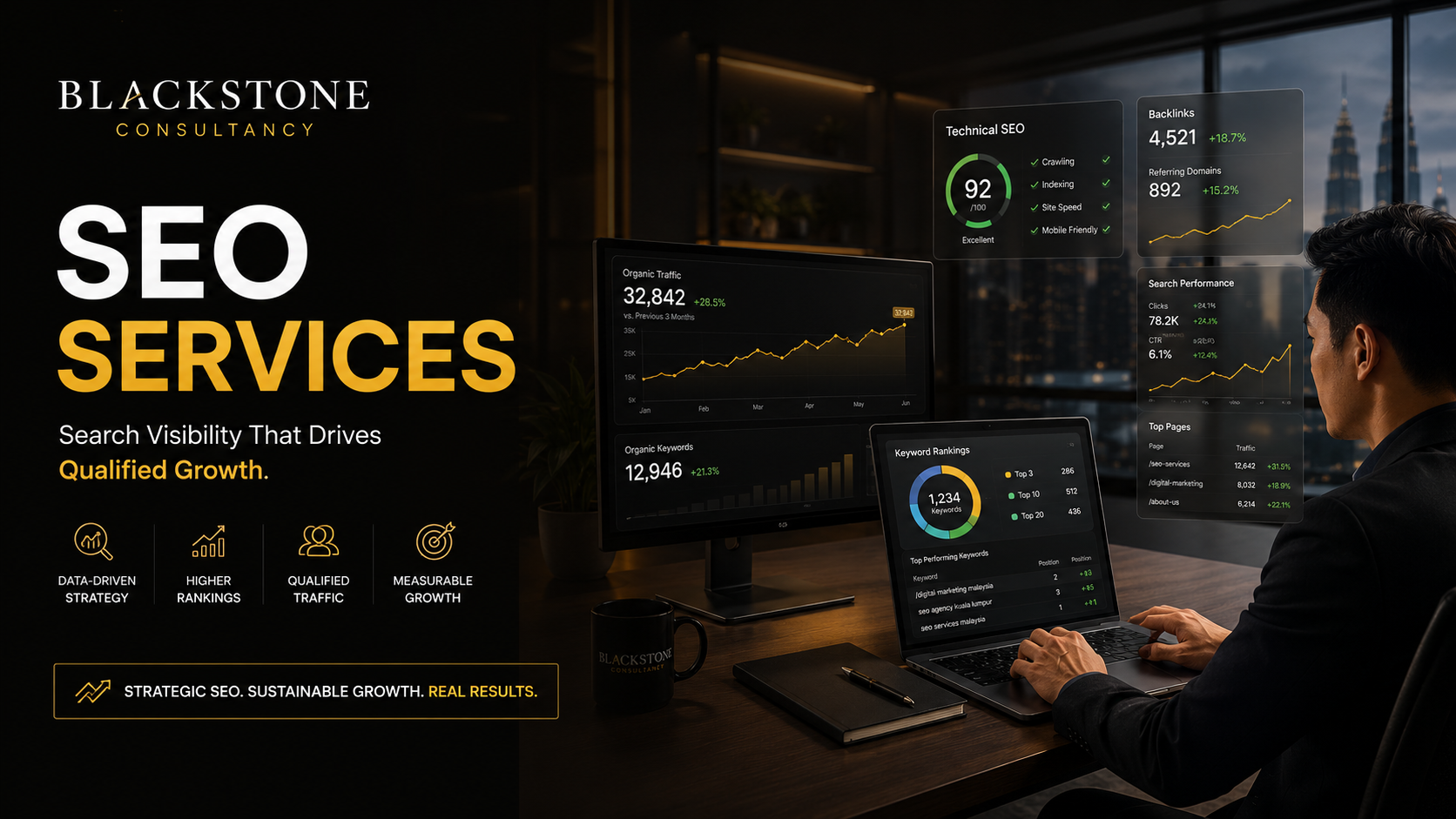
For Malaysian companies, search is no longer just a digital marketing channel. It is part of how customers compare suppliers, shortlist brands, evaluate credibility, and decide whether to enquire or buy. Whether a business sells products through an ecommerce store, generates leads through a corporate website, or supports offline sales with digital visibility, the ability to appear for the right searches has a direct influence on growth.
The challenge is that search behaviour has become more selective. Buyers do not only search for broad product names. They look for pricing guidance, comparisons, locations, reviews, delivery information, technical specifications, compliance requirements, and proof that a provider understands their market. At the same time, competition has widened. A Malaysian business may be competing with local SMEs, regional marketplaces, overseas suppliers, aggregators, directories, social platforms, and paid ads on the same results page.
This is why **seo for online businesses** should be treated as a strategic growth function, not a one-off website task. Ranking for keywords is important, but rankings alone do not build a sustainable acquisition channel. The stronger question is: which searches indicate genuine commercial intent, and how should the business capture, convert, and retain that demand?
At Blackstone Consultancy, we would begin by looking at the business model behind the website. An ecommerce brand needs different search priorities from a B2B service provider. A company selling high-consideration products may need educational content, comparison pages, and strong trust signals. A local service business may require location relevance, clear enquiry pathways, and consistent brand information across search touchpoints. A distributor or manufacturer may need to target technical searches, procurement queries, and industry-specific language.
A strategic SEO assessment should therefore cover more than metadata and blog topics. It should examine market demand, competitor positioning, content gaps, technical crawlability, site structure, conversion paths, analytics quality, and how search supports revenue objectives. For Malaysian teams, it should also consider language mix, local terminology, mobile-first behaviour, marketplace influence, and how customers move between Google, social media, WhatsApp, and direct sales conversations.
The businesses that benefit most from search are usually not those that publish the most content. They are the ones that understand what their buyers need at each stage, organise their website around that demand, and measure SEO against commercial outcomes. Done properly, search becomes a long-term asset: a way to reduce dependency on short campaign cycles, improve qualified traffic, and strengthen market authority over time.
What The Market Is Really Responding To
Search demand is rarely just about keywords. It reflects what customers are trying to compare, avoid, justify, or buy. For Malaysian businesses, especially those competing across Klang Valley, Penang, Johor Bahru, and nationwide ecommerce markets, the real opportunity is understanding why people search before deciding what content to publish.
Customers Are Looking For Signals Of Trust
Online buyers do not move in a straight line from search to purchase. They check whether a company looks credible, whether pricing feels reasonable, whether reviews and case studies are convincing, and whether the brand appears active and reliable.
This is why SEO should not be treated as a traffic exercise alone. A page that ranks but fails to answer practical buying concerns will underperform commercially. Customers want to know:
- Is this business legitimate and established?
- Does it understand my specific problem?
- Are the services or products clearly explained?
- Can I compare options without feeling pressured?
- Is there enough proof to justify making an enquiry or purchase?
Strong SEO content should support these decisions, not simply attract visits.
Category Signals Shape Commercial Intent
Every market has signals that influence how customers interpret value. In some categories, price transparency matters. In others, technical expertise, delivery speed, compliance, warranty, after-sales support, or portfolio strength may carry more weight.
For example, a B2B buyer searching for a service provider may respond better to detailed process pages, industry-specific explanations, and procurement-friendly information. An ecommerce customer may need clearer product categorisation, comparison content, shipping details, and return policies. A local service customer may care more about location coverage, response time, and visible customer feedback.
This is where seo for online businesses becomes more commercial than technical. The objective is to match search visibility with the factors that help customers choose.
Brand Perception Starts Before The First Enquiry
Many potential customers form an opinion before speaking to your sales team. Your search results, page titles, content depth, Google Business Profile, reviews, and website experience all contribute to that perception.
If competitors appear more helpful, more specific, or more established in search, they may gain the enquiry even before a direct comparison happens. This does not always mean they offer a better product or service. It often means they have aligned their online presence more closely with what the market expects to see.
Businesses that want stronger results should review whether their content reflects real buyer concerns, not internal assumptions. Blackstone Consultancy's seo marketing services are built around this commercial view: improving visibility while strengthening the trust signals that influence enquiries, sales conversations, and customer confidence.
The Strategic Pattern Beneath The Surface
Strong digital growth rarely comes from isolated tactics. It usually comes from a pattern: the business understands what the market is already looking for, shapes its offer around that demand, explains the offer clearly, and removes friction before the buyer makes contact. This is the practical foundation of **seo for online businesses**.
Search Demand Reveals Commercial Pressure
Search data is not just a list of keywords. It shows where customers are uncertain, comparing options, checking prices, seeking reassurance, or looking for a provider they can trust. For Malaysian businesses, this matters because buying behaviour can vary by location, language preference, urgency, and category maturity.
A person searching for a "supplier", "agency", "clinic", "software", or "quotation" is not always at the same stage of decision-making. Some are researching. Some are shortlisting. Some are ready to act but need proof. The role of strategy is to separate these signals instead of treating all traffic as equal.
Positioning And Offer Design Must Match Intent
If the website says one thing but the market is looking for another, traffic will not convert well. A company may position itself as premium, technical, local, fast, specialised, or cost-effective. Each position attracts different search behaviour and requires a different content structure.
For example, a premium B2B provider should not only publish broad educational articles. It may also need pages that explain methodology, suitability, implementation process, service scope, and decision criteria. A local service provider may need stronger location relevance, practical FAQs, and clearer enquiry pathways. The offer should answer the buyer's real questions before the sales conversation begins.
Content Should Support The Buying Journey
Useful content does more than fill a blog. It reduces uncertainty. It helps prospects understand the problem, compare possible solutions, recognise risks, and decide whether the business is a suitable fit.
This means content planning should connect directly to commercial intent. Awareness topics can build trust, but decision-stage pages often carry stronger business value. A balanced strategy includes both: content that attracts the right audience and pages that help qualified visitors take the next step.
Conversion Behaviour Completes The Pattern
The final signal is what visitors do after they arrive. Do they read, compare, click, enquire, abandon, or return later? These behaviours show whether the market, message, offer, and page experience are aligned.
The strategic pattern is simple but demanding: identify demand, interpret intent, shape the offer, publish with purpose, and measure behaviour. When these parts work together, search becomes less of a traffic channel and more of a commercial learning system.
Audience, Message, And Channel Fit
A sound strategy for **seo for online businesses** starts with a clear view of who is making the decision, what they already believe, and where they look for reassurance. Malaysian businesses often serve several audiences at once: price-sensitive consumers, procurement-led corporate buyers, regional decision makers, and internal stakeholders who must justify marketing spend. Treating all of them with the same content usually weakens performance.
Segment The Audience By Decision Readiness
Not every visitor is ready to request a quote. Some are still defining the problem: slow enquiries, poor search visibility, high ad dependency, or weak online trust. These users need educational content that explains the issue in practical terms.
Others are comparing providers, platforms, or solutions. They need proof of process, transparent scope, examples of work, pricing logic, and reasons to believe the business can deliver. Existing customers may be looking for support, upgrades, repeat purchases, or reassurance that they made the right choice. Internal stakeholders, such as directors or finance teams, need commercial clarity: risk, cost, expected effort, and how success will be reviewed.
Match The Message To The Buyer's Concern
The message should answer the buyer's most immediate doubt. A founder may ask, "Will this bring better leads?" A marketing manager may ask, "Can this support our campaign targets?" A procurement team may ask, "Is this vendor credible and compliant?" A consumer may simply want confidence that the product is reliable, available, and fairly priced.
This means content should not only describe features. It should explain outcomes, trade-offs, limitations, and next steps. For example, a B2B service page should cover scope, industries served, delivery process, and decision criteria. An ecommerce category page should help shoppers compare options, understand suitability, and complete the purchase with fewer questions.
Choose Channels Based On Intent
Search is strong when people are actively researching a problem or comparing options. LinkedIn may support B2B authority and senior-level visibility. Email is useful for nurturing existing leads and customers. WhatsApp, still widely used in Malaysia, can help convert enquiries when response quality is consistent. Paid media may accelerate visibility, but it should not replace strong landing pages and organic content.
The best channel mix depends on the decision stage. Early-stage audiences need useful explanations. Comparison-stage buyers need evidence. Ready-to-buy users need clarity, speed, and trust signals. A practical strategy connects these stages instead of treating every click as an immediate sale.
What Malaysian Businesses Can Apply
For Malaysian companies, the practical lesson is simple: SEO should not operate as a separate technical task. It should connect directly with sales priorities, customer behaviour, content planning, and social visibility. Whether the business sells professional services, consumer products, property, healthcare, education, or B2B solutions, search demand should help guide what the brand publishes and promotes.
Start With Commercial Search Intent
Before producing more content, review the types of searches that are most likely to lead to enquiries, bookings, store visits, or purchases. Many businesses focus too heavily on broad informational topics while neglecting pages that explain services, pricing factors, locations served, comparisons, and decision-making criteria.
A practical SEO marketing services approach should map keywords into clear intent groups:
- People researching a problem
- People comparing providers or products
- People ready to request a quotation
- People looking for a nearby or Malaysia-based supplier
- Existing customers searching for support, warranty, or repeat purchase information
This helps marketing teams decide which pages need deeper content, which pages need better calls to action, and which topics should be supported by social content.
Align SEO and Social Media Planning
Search content and social content should reinforce each other. A strong article can be broken down into LinkedIn posts, carousel content, short videos, FAQs, and sales enablement material. At the same time, questions from comments, direct messages, sales calls, and customer service teams can reveal new SEO topics.
Working with a social media agency becomes more effective when the agency is not only posting for visibility, but also helping the business understand audience objections, trending concerns, and content formats that can support the search journey. For example, if prospects repeatedly ask about timelines, compliance, delivery areas, or service scope, those questions should be answered both on the website and across social platforms.
Improve Pages That Already Have Business Value
Malaysian businesses do not always need to start with a complete website rebuild. Often, the fastest practical move is to improve existing pages that already attract some traffic or support sales conversations. This can include clearer headings, stronger internal links, better service explanations, updated FAQs, improved local relevance, and more persuasive enquiry points.
For seo for online businesses, the priority should be measurable commercial usefulness. Pages should not only rank; they should help buyers understand why the company is credible, what problem it solves, and what action to take next.
Build a Consistent Review Rhythm
SEO and social media performance should be reviewed together every month. Look at search queries, page engagement, enquiry quality, content reach, and customer questions. The goal is to keep refining content based on real market signals, not assumptions. This creates a more disciplined marketing system that supports both visibility and revenue opportunities.
Measurement That Keeps The Strategy Honest
Strong measurement prevents teams from confusing activity with progress. For Malaysian companies investing in **seo for online businesses**, the goal is not simply to publish more pages or chase higher rankings. The goal is to understand whether search visibility is attracting the right people, whether those visitors trust the business, and whether enquiries are commercially useful.
Measure Search Performance Beyond Rankings
Rankings still matter, but they should be read with context. Track the queries that bring impressions, the pages gaining or losing visibility, and whether the search intent matches what the business can actually fulfil. A page may rank well but attract visitors who are too early, too price-sensitive, or looking for something the company does not offer.
Review search data by topic cluster, not just by individual keyword. This helps teams see whether authority is building around the services, locations, sectors, or problems that matter most.
Assess Engagement Quality
Traffic volume is only useful when visitors behave in a way that suggests relevance. Look at whether users scroll, click through to service pages, compare options, return later, or complete meaningful actions such as form submissions, WhatsApp clicks, brochure downloads, or consultation requests.
For Malaysian businesses, device behaviour is especially important. Many buyers research on mobile, but may complete more serious actions later on desktop or through direct contact. Measurement should account for this journey instead of judging every visit in isolation.
Track Lead Quality, Not Just Lead Count
A higher number of enquiries can still be a poor outcome if the leads are unqualified. Marketing and sales teams should agree on simple lead quality categories: relevant industry, suitable budget range, service fit, urgency, location, decision-maker involvement, and likelihood to proceed.
This feedback should return to the SEO team regularly. If a page attracts many low-fit enquiries, the issue may be unclear positioning, weak qualification copy, misleading search intent, or missing pricing context.
Include Operational Signals
Search performance is also affected by what happens after the click. Slow response times, inconsistent follow-up, poor quotation processes, or unclear service handovers can reduce the value of otherwise strong visibility.
Useful operational signals include enquiry response time, call connection rates, proposal turnaround, CRM completion, lost-lead reasons, and repeat questions from prospects. These reveal whether the business is ready to convert the demand it is creating.
Build A Repeatable Review Loop
A practical review cycle should combine monthly search analysis, quarterly content decisions, and ongoing sales feedback. Keep the discussion focused: what is gaining visibility, what is attracting qualified demand, what needs improvement, and what should be stopped.
This discipline keeps strategy grounded in evidence rather than assumptions. It also helps business owners decide where to invest next: better content, stronger conversion paths, clearer offers, improved follow-up, or deeper trust-building assets.
Risks, Trade-Offs, And Better Questions
Visible tactics can be tempting. A competitor publishes more articles, changes title tags, builds location pages, or appears in more search results, and the immediate reaction is to copy. That may feel practical, but it can waste budget if the tactic is separated from the commercial reason behind it.
For Malaysian business owners, the better approach is not to ask, "What are they doing?" but "Why might this work for them, and would the same logic apply to us?"
Common Mistakes To Avoid
One mistake is treating traffic as the main objective. More visitors are useful only if they represent the right market, have buying intent, or help build future demand. A page that attracts broad informational searches may look successful in reports while contributing little to enquiries, sales, or qualified leads.
Another mistake is copying content formats without matching business capability. If a competitor ranks with detailed product comparisons, they may have stronger pricing data, clearer positioning, or a wider product range. Publishing a weaker version may not close the gap.
Teams should also be careful with shortcuts: thin location pages, over-optimised copy, duplicated service descriptions, or content produced only to chase keywords. These may create activity, but they rarely build trust. In competitive Malaysian sectors such as property, finance, education, healthcare, logistics, and professional services, weak content can damage credibility before a salesperson ever speaks to the prospect.
Questions Before Copying A Tactic
Before adopting any visible tactic, ask:
- Does this align with our actual customer journey?
- Can we explain why this page should rank and convert?
- Do we have better evidence, expertise, pricing clarity, or service detail than competing pages?
- Will this attract buyers, researchers, jobseekers, or irrelevant traffic?
- Can our sales or operations team support the promise made on the page?
- How will we measure commercial value beyond impressions and clicks?
These questions keep seo for online businesses connected to business reality, not just search visibility.
Staying Commercially Grounded
A sound strategy accepts trade-offs. Some keywords are too broad. Some topics require more expertise than the business can currently demonstrate. Some opportunities may bring traffic but not revenue. Saying no is part of good planning.
The strongest search strategies are built around fit: the right audience, the right offer, the right proof, and the right measurement. Copying what is visible may start the conversation, but disciplined questioning determines whether the tactic deserves budget.
A Practical Roadmap For Turning The Insight Into Action
Insight only becomes valuable when it changes priorities, budgets, and daily execution. For Malaysian business owners and marketing teams, the next planning cycle should not begin with "what content should we publish?" It should begin with a sharper question: "What must the market understand, trust, and do before it is ready to buy from us?"
1. Start With Market Signals, Not Assumptions
Review the visible behaviour around your category. Look at search demand, competitor messaging, sales objections, customer enquiries, proposal feedback, social comments, and recurring questions from distributors or front-line teams. The goal is not to collect endless data. The goal is to identify the patterns that reveal what buyers care about before they contact you.
For example, if prospects repeatedly compare price, your issue may not be pricing alone. It may be unclear differentiation, weak proof, or content that does not explain value early enough.
2. Convert Insights Into Commercial Questions
Once patterns are identified, turn them into decisions. Ask:
- Which buyer questions are not properly answered on our website?
- Which services or products need clearer positioning?
- Which pages help sales conversations, and which ones create confusion?
- Where are we relying too heavily on paid media because organic visibility is weak?
- Which topics show buying intent, not just general interest?
This step keeps seo for online businesses connected to revenue rather than treating it as a technical checklist or content volume exercise.
3. Prioritise The Next 90 Days
Avoid trying to fix everything at once. Choose a small number of high-impact actions for the next quarter. These may include rewriting key service pages, building comparison content, strengthening local relevance for Malaysian search terms, improving internal links, clarifying calls to action, or updating outdated articles that still attract relevant traffic.
Assign each action to an owner. Define what "done" means. A page is not complete just because it is published; it should answer the buyer's question, reflect the company's positioning, and guide the next step clearly.
4. Measure Decisions, Not Vanity Metrics Alone
Track rankings and traffic, but do not stop there. Review enquiry quality, assisted conversions, sales feedback, engagement on priority pages, and whether content reduces repetitive questions during the buying process.
At the end of the cycle, ask one practical question: did the insight improve a business decision? If yes, expand it. If not, refine the assumption and test again. This is how insight becomes a repeatable marketing asset rather than a one-off observation.