ZUS Coffee has become one of the most discussed Malaysian consumer brands in recent years, not only because it sells coffee, but because it has turned a daily purchase into a highly visible growth story. For business owners and marketing teams, the brand offers a useful case study in positioning, accessibility, digital adoption, and rapid market expansion.
This insight looks at the zus coffe marketing strategy from a commercial perspective: what the brand appears to be doing well, where its choices support growth, and what other Malaysian companies can learn from its approach. The focus is not to praise the brand uncritically, but to examine the strategic signals behind its market presence.
For many local businesses, the key question is not "How do we become the next ZUS Coffee?" A better question is: "What principles can we apply from this type of growth model to our own category?" Coffee is a competitive space with strong global chains, independent cafés, convenience-led beverage brands, and price-sensitive consumers. Standing out requires more than a good product. It requires a clear brand role, repeated customer engagement, and a business model that can scale without losing relevance.
From Blackstone Consultancy's point of view, ZUS Coffee is interesting because it sits at the intersection of several important growth levers: brand positioning, outlet strategy, digital ordering behaviour, product accessibility, and customer familiarity. These are not isolated marketing activities. When aligned properly, they create momentum. When mismanaged, they create confusion, operational strain, or brand dilution.
This section introduces the broader analysis that follows. We will look at the brand definition, local origins, leadership structure, outlet expansion, regional growth, product differentiation, and customer engagement. Each angle matters because growth is rarely driven by one single campaign. It is usually the result of multiple strategic decisions working together over time.
For Malaysian SMEs, retail brands, F&B operators, and marketing teams, the practical lesson is clear: visibility alone is not strategy. A brand must know who it serves, why customers should choose it, how it will remain accessible, and what experience it promises consistently. ZUS Coffee provides a timely example of how a local brand can compete in a crowded category by combining convenience, pricing perception, digital habits, and everyday relevance.
The purpose of this analysis is to extract useful business lessons, not to imitate blindly. Strong strategy begins by understanding what works, why it works, and whether it fits your own market realities.
What The Market Is Really Responding To
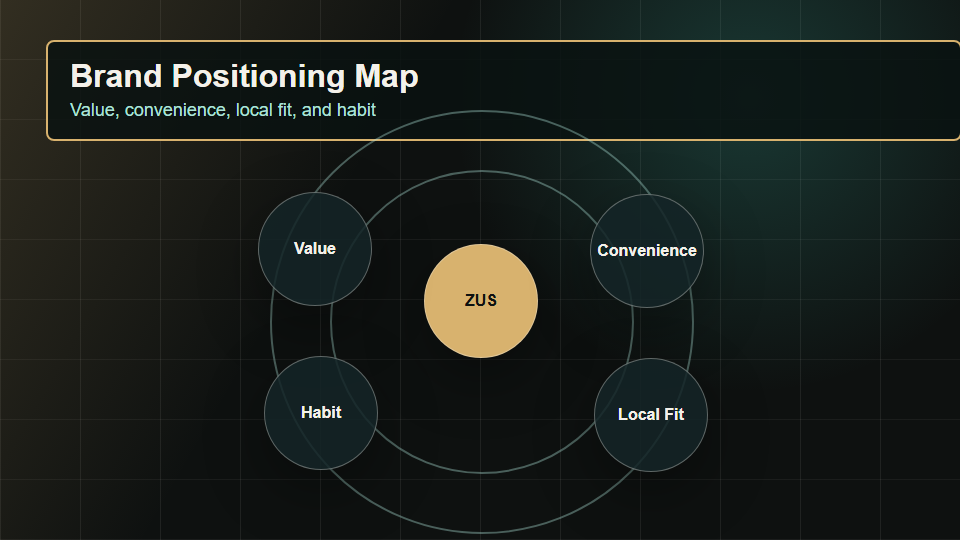
When people discuss the **zus coffe marketing strategy**, they are often not only talking about coffee. They are responding to a wider shift in Malaysian consumer behaviour: convenience, affordability, brand familiarity, and the feeling that a product "fits" into daily routines.
For business owners, this is the more useful lesson. The market rewards brands that reduce friction, stay visible, and make purchase decisions feel simple.
Convenience Has Become A Brand Asset
In the coffee category, taste matters, but convenience often determines frequency. Customers are not always looking for the most complex brew or the most premium café environment. Many want a reliable drink before work, during lunch, after class, or while commuting.
This changes how brands should think about marketing. A convenient brand is not just one with many outlets. It is a brand that is easy to remember, easy to order from, easy to locate, and easy to repeat. Mobile ordering, delivery presence, outlet accessibility, and consistent product naming all contribute to commercial performance.
For Malaysian brands, the key question is: are customers able to buy from you at the moment they are ready, or are you making them work too hard?
Category Signals Matter More Than Product Claims
In a crowded market, customers rely on signals. These include store design, menu structure, pricing cues, packaging, app experience, social media content, and the tone of promotions. Together, these signals tell customers what kind of brand they are dealing with.
A brand that appears modern, accessible, and consistent can win trust faster than a brand that only talks about quality. This is especially important in categories where customers make quick, low-risk purchase decisions. Coffee, food, beauty, retail, and fitness businesses all face this reality.
The stronger the category signal, the easier it is for customers to understand where the brand fits: premium, value-driven, lifestyle-led, convenience-led, or community-focused.
Brand Perception Converts Interest Into Intent
Awareness alone does not guarantee sales. A customer may know a brand but still choose a competitor if the value proposition is unclear. Strong brand perception bridges that gap.
For example, if customers associate a brand with speed, fair pricing, trendy flavours, or dependable quality, they are more likely to buy without overthinking. This is where marketing must connect perception with action. Content, promotions, search visibility, store presence, and CRM should all support the same commercial message.
For Malaysian businesses, the opportunity is not to imitate another brand's playbook. It is to identify the behaviour your market is already showing, then build a clearer path from attention to purchase through sharper positioning and better digital marketing.
The Strategic Pattern Beneath The Surface
What makes ZUS Coffee interesting is not only its store count, menu, or app adoption. The more useful lesson for Malaysian business owners is the pattern connecting its positioning, offer design, content, search visibility, and conversion behaviour. When these parts work together, a brand becomes easier to notice, easier to choose, and easier to buy from repeatedly.
Positioning Creates The First Filter
A coffee brand cannot speak to everyone in the same way. The strategic pattern begins with a clear role in the customer's mind: accessible, modern coffee for everyday routines. This type of positioning helps customers decide quickly whether the brand fits their lifestyle, budget, and consumption habits.
For business owners, the question is not "How do we sound premium?" but "What decision are we helping customers make faster?" Strong positioning reduces friction before a person even views the menu, downloads an app, or searches for the nearest outlet.
Offer Design Turns Interest Into Action
A brand promise must be supported by the offer. Menu structure, pricing tiers, bundles, seasonal drinks, pickup options, delivery availability, and app-based convenience all influence conversion. Customers may discover a brand emotionally, but they usually convert through practical reasons: value, speed, variety, ease, and confidence.
This is where many local businesses underperform. They invest in visibility but leave the offer unclear. A campaign can attract attention, but if the buying path feels confusing or the offer lacks a strong reason to act now, demand leaks away.
Content And Search Capture Existing Demand
The market does not only respond to advertising. People search, compare, read reviews, check menus, look for outlets, and ask whether a brand is worth trying. A practical content system answers these questions before competitors do.
For brands studying the zus coffe marketing strategy, the deeper takeaway is that content should not exist only for branding. It should support each stage of decision-making: discovery, consideration, purchase, repeat visit, and advocacy. Search demand reveals what customers already care about, while social content keeps the brand present in daily conversation.
Conversion Behaviour Completes The Loop
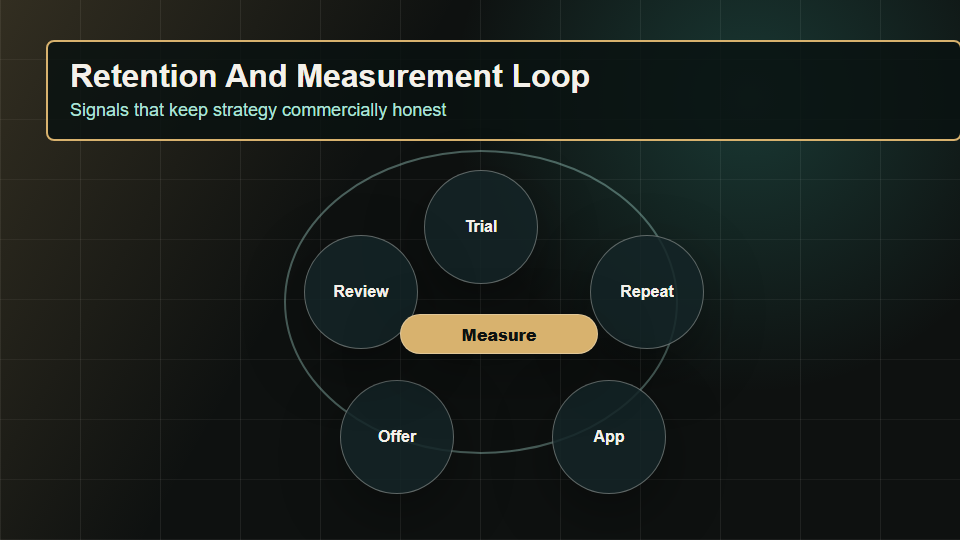
The final pattern is measurement. Every promotion, post, outlet page, menu update, and app interaction should tell the business something about buyer behaviour. Which products attract first-time customers? Which offers drive repeat purchases? Which locations create the most search intent? Which messages produce action instead of just engagement?
When marketing teams connect these signals, strategy becomes less about guessing and more about improving the system. That is the real lesson beneath the surface: sustainable brand growth comes from aligning attention, relevance, access, and conversion into one operating rhythm.
Audience, Message, And Channel Fit
A strong café brand does not speak to "coffee drinkers" as one broad group. The more useful view is to separate customers by occasion, price sensitivity, convenience needs, and social behaviour. This is where the **zus coffe marketing strategy** becomes interesting for Malaysian brands to study: the message is not only about coffee quality, but about fitting into a customer's day with minimal friction.
Audience Segments That Matter
For urban professionals, the core need is speed, consistency, and a reliable daily purchase. They are likely to respond to messages around convenience, app ordering, delivery, pick-up, and value bundles. The product is coffee, but the commercial hook is routine.
For students and younger consumers, the appeal is more emotional and social. They may be more responsive to seasonal drinks, limited-time flavours, lifestyle content, and affordability. This segment is also more likely to share visually appealing products or promotional moments if the brand gives them a reason to do so.
For families and casual groups, the decision may be less about caffeine and more about accessibility. Outlet location, menu variety, comfort, and non-coffee options become important. The message should reduce hesitation: easy to visit, easy to choose, and suitable for different preferences.
Message Fit Across The Decision Journey
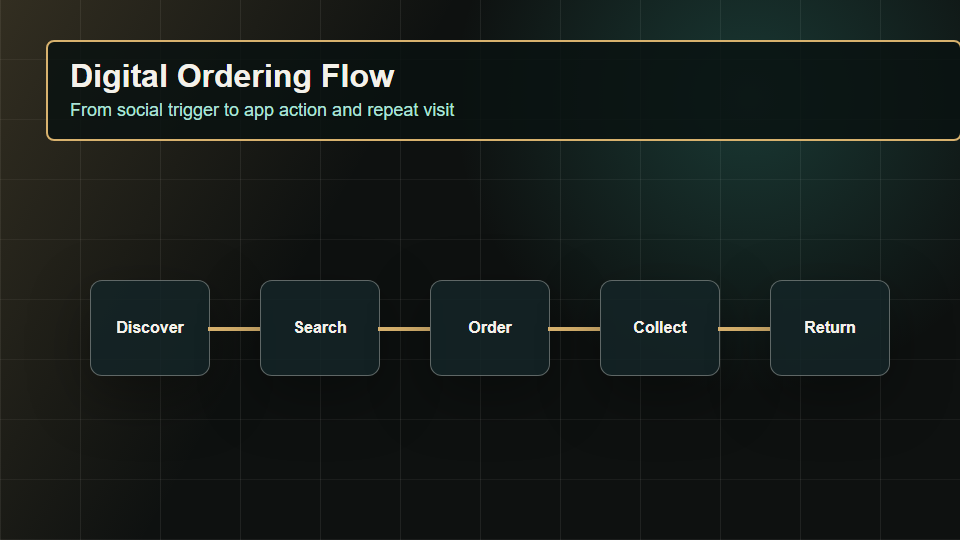
At the awareness stage, the message must be simple and distinctive. A café brand needs to quickly answer: why this brand, why now, and why nearby? Campaigns that focus only on product names may not be enough. The stronger angle is often a clear reason to try, such as a new flavour, opening promotion, app deal, or relatable local moment.
At the consideration stage, customers compare value, convenience, taste expectations, and brand familiarity. This is where menu clarity, customer reviews, social proof, and location information matter. The brand should make it easy for a customer to decide without overthinking.
At the repeat-purchase stage, the message should shift from attraction to habit. Loyalty mechanics, personalised offers, app reminders, and consistent product experience are more important than broad brand storytelling. Repeat customers do not need to be convinced from zero; they need a timely reason to return.
Channel Fit For Malaysian Markets
TikTok and Instagram are useful for discovery, especially for new products, outlet openings, and brand personality. Google Search and Maps support high-intent customers who are already looking for coffee nearby. Delivery platforms capture convenience-led demand, while an owned app strengthens retention and data collection.
For business owners, the lesson is clear: channel selection should follow customer intent. Awareness channels create attention, search channels capture demand, and owned channels build repeat sales. A brand grows faster when each channel has a specific commercial job.
What Malaysian Businesses Can Apply
The useful lesson from studying the **zus coffe marketing strategy** is not to copy the brand, but to understand how clear positioning, convenient access, and consistent digital visibility can work together. For Malaysian SMEs, retailers, F&B brands, clinics, education providers, and service companies, the same principle applies: make it easy for customers to understand you, find you, choose you, and return.
Build a Position Customers Can Repeat
A strong brand does not need to explain everything at once. Malaysian businesses should define one clear promise that customers can remember and compare against competitors. This may be faster service, better value, premium quality, local expertise, wider availability, or specialist knowledge.
Once this position is clear, it should appear consistently across the website, Google Business Profile, social media, ads, menus, brochures, sales decks, and customer service scripts. Mixed messaging weakens trust. Consistency makes the business easier to recognise and easier to recommend.
Use Search Demand to Guide Expansion
Before opening a new branch, entering a new state, or launching a new product category, businesses should study how people search. This includes location keywords, competitor searches, "near me" terms, product comparisons, and service-related questions.
For example, a business expanding into Johor, Penang, Sabah, or Sarawak should not rely only on foot traffic or paid ads. It should prepare local landing pages, branch pages, map listings, review collection processes, and content that answers location-specific buying concerns. This is where seo marketing services can support commercial planning, not just rankings.
Turn Product Differences into Content
If your business has a better ingredient, process, warranty, delivery model, consultation method, or pricing structure, do not leave it hidden in internal documents. Turn those differences into website sections, comparison pages, FAQs, short videos, blog articles, and sales enablement content.
Customers often search because they are comparing options. Helpful content reduces uncertainty and gives your team a stronger reason to be shortlisted.
Connect Digital Marketing With Operations
Marketing cannot succeed if the customer experience is inconsistent. If your website promises fast response, the sales team must follow through. If your ads promote convenience, your booking or checkout process must be simple. If your content highlights expertise, your frontline team must be prepared to answer questions confidently.
The practical takeaway for Malaysian businesses is to treat digital marketing as part of the operating system, not a separate campaign. Strong SEO, clear branding, useful content, and reliable customer experience should reinforce each other. That combination is what turns attention into enquiries, and enquiries into repeat business.
Measurement That Keeps The Strategy Honest
A strong strategy is not proven by how polished it looks in a presentation. It is proven by whether customers search for it, understand it, act on it, return to it, and recommend it. For Malaysian business owners studying the **zus coffe marketing strategy**, the key lesson is not to copy the surface-level tactics, but to build a measurement system that shows whether the brand is becoming more commercially effective.
Search Signals: Are People Looking For You Correctly?
Search behaviour is often the first sign of brand traction. Track whether people are searching for your brand name, product categories, outlet locations, menu items, promotions, and "near me" terms. The aim is to understand whether awareness is growing in a way that supports revenue.
Useful signals include:
- Branded search volume over time
- Google Business Profile views, calls, direction requests, and website clicks
- Search queries linked to specific products or branches
- Local ranking visibility for high-intent terms
- Questions customers repeatedly ask before purchase
If people are searching, but not finding clear answers, the issue may not be demand. It may be content, local SEO, or poor information structure.
Engagement Quality: Are The Right People Paying Attention?
Likes and views are easy to celebrate, but they do not always indicate buying intent. A better review looks at the quality of engagement. Are people saving menus, asking about outlets, tagging friends with purchase intent, or clicking through to ordering channels?
Marketing teams should separate passive engagement from commercial engagement. A funny post may create reach, but a clear product post may drive decisions. Both can have value, but they should not be judged by the same metric.
Lead And Sales Quality: Is Attention Turning Into Revenue?
For brands with online ordering, catering, subscriptions, franchise interest, or B2B enquiries, lead quality matters more than lead volume. Measure which channels attract customers who actually purchase, repeat, or enquire seriously.
Track conversion paths by campaign, platform, location, offer, and product category. If many users click but few buy, review the landing page, price clarity, delivery coverage, stock availability, and checkout process.
Operational Signals: Can The Business Deliver The Promise?
Marketing performance is weakened when operations cannot support demand. Monitor complaint themes, delivery delays, product consistency, outlet-level reviews, staff response time, and refund patterns. These signals reveal whether the brand promise is being fulfilled at ground level.
Review Loops: Make Improvement Routine
Set a monthly review rhythm. Compare search, engagement, conversion, and operational data together, not separately. The goal is not to prove that every campaign worked. The goal is to identify what to repeat, what to refine, and what to stop before wasted spend becomes normal.
Risks, Trade-Offs, And Better Questions
A visible brand tactic is easy to admire, but dangerous to copy blindly. Many teams look at a fast-growing coffee chain and focus on the surface: bold colours, app promotions, influencer content, seasonal drinks, or aggressive outlet visibility. The harder question is whether the business model underneath can support those choices.
For Malaysian business owners studying the **zus coffe marketing strategy**, the main lesson is not "do the same thing." It is to understand what each move costs, what it depends on, and what trade-off it creates.
Mistakes To Avoid When Copying A Visible Tactic
One common mistake is copying promotions without understanding margin impact. Discount-led campaigns may increase orders, but they can also train customers to wait for deals. If the average basket size, repeat purchase rate, and operating margin are not strong enough, high campaign activity can become expensive noise.
Another mistake is expanding visibility before strengthening operations. More outlets, more ads, or more delivery exposure can expose weaknesses quickly: inconsistent service, stock issues, slow fulfilment, poor staff training, or weak customer support. Marketing creates demand, but operations must protect the experience.
Brands should also avoid copying tone of voice without earning the right to use it. A playful, youthful, or highly localised personality works only when it matches the product, service culture, and customer expectation. If the brand sounds modern online but feels careless in-store, the mismatch weakens trust.
Better Questions Before Making A Move
Before adopting any tactic, teams should ask:
- What business problem are we solving: awareness, trial, repeat purchase, retention, or basket growth?
- Can our margins support this campaign if it succeeds?
- Will this attract the customers we actually want, or only short-term deal seekers?
- Do we have the operational capacity to deliver the promise consistently?
- What will we stop doing if this becomes a priority?
- How will we measure whether this activity improved the business, not just engagement?
These questions keep marketing decisions commercially grounded. A campaign that looks exciting on social media may still be weak if it does not improve customer quality, frequency, profitability, or brand preference.
Stay Grounded In Your Own Business Model
The strongest strategy is not necessarily the loudest one. A premium café, neighbourhood retailer, B2B service firm, or local franchise group will each need different choices. What matters is fit: between positioning, pricing, customer behaviour, channel strategy, and operational strength.
For Malaysian brands, the smarter approach is to study visible winners with discipline. Identify the principle behind the tactic, test it at a manageable scale, measure the commercial outcome, and only then decide whether it deserves more investment.
A Practical Roadmap For Turning The Insight Into Action
For Malaysian business owners and marketing teams, the real value of studying a fast-moving consumer brand is not imitation. It is translation. The question is not "How do we become ZUS Coffee?" but "Which operating principles can we adapt to our market, margins, team capacity, and customer behaviour?"
A useful next step is to convert the lessons from the zus coffe marketing strategy into a planning roadmap that your leadership team can execute over the next cycle.
1. Clarify The Commercial Role Of Brand
Start by defining what the brand must achieve commercially. Is the priority higher footfall, stronger repeat purchase, better customer retention, franchise confidence, improved average order value, or faster market entry?
Without this clarity, marketing becomes a collection of campaigns rather than a business system. Leadership should agree on three to five measurable priorities before deciding on channels, content, promotions, or partnerships.
2. Build Around A Clear Customer Occasion
Strong consumer brands do not only sell products; they attach themselves to repeatable moments. For a café, that may be the morning commute, office break, student study session, delivery order, or weekend treat.
Map your own customer occasions. Then ask:
- What triggers the purchase?
- What makes the customer choose us instead of another option?
- What friction stops repeat purchase?
- What message is most relevant at that moment?
- Which channel best reaches the customer before the decision?
This helps the marketing team move from generic awareness to timely, behaviour-led execution.
3. Align Product, Pricing, Content, And Distribution
A brand promise becomes stronger when every touchpoint supports it. Product development, outlet experience, delivery presence, loyalty mechanics, social content, and customer service should not operate separately.
Use a simple operating model: set the strategy, produce consistent assets, automate where possible, report on performance, and improve based on evidence. This keeps marketing disciplined without slowing down creativity.
4. Create A 90-Day Execution Rhythm
For the next planning cycle, divide work into three phases:
**Days 1-30: Diagnose.** Review customer segments, competitor positioning, sales patterns, content performance, outlet feedback, and loyalty data.
**Days 31-60: Build.** Refresh campaign messaging, define priority offers, prepare creative assets, improve landing pages or menus, and brief front-line teams.
**Days 61-90: Test and refine.** Run controlled campaigns, compare results by channel and location, gather customer feedback, and decide what to scale, stop, or adjust.
5. Make Marketing Accountable To Business Learning
The best outcome is not simply a successful campaign. It is a better understanding of what drives customer choice. Treat each campaign as a learning cycle, and your marketing will become sharper, more efficient, and more commercially useful over time.
References And Further Reading
The analysis above uses public source material as reference points, including ZUS Coffee's own explanation of its affordable specialty coffee and online-to-offline model on the official ZUS Coffee about page, the brand's public positioning around daily coffee convenience on the official ZUS Coffee homepage, BusinessToday's reporting on how technology shaped the company's expansion in How Technology Is Fueling ZUS Coffee's Growth, and the public App Store listing for the ZUS Coffee app.
For clarity, ZUS is treated here as a market example, not as a client claim or private performance case.