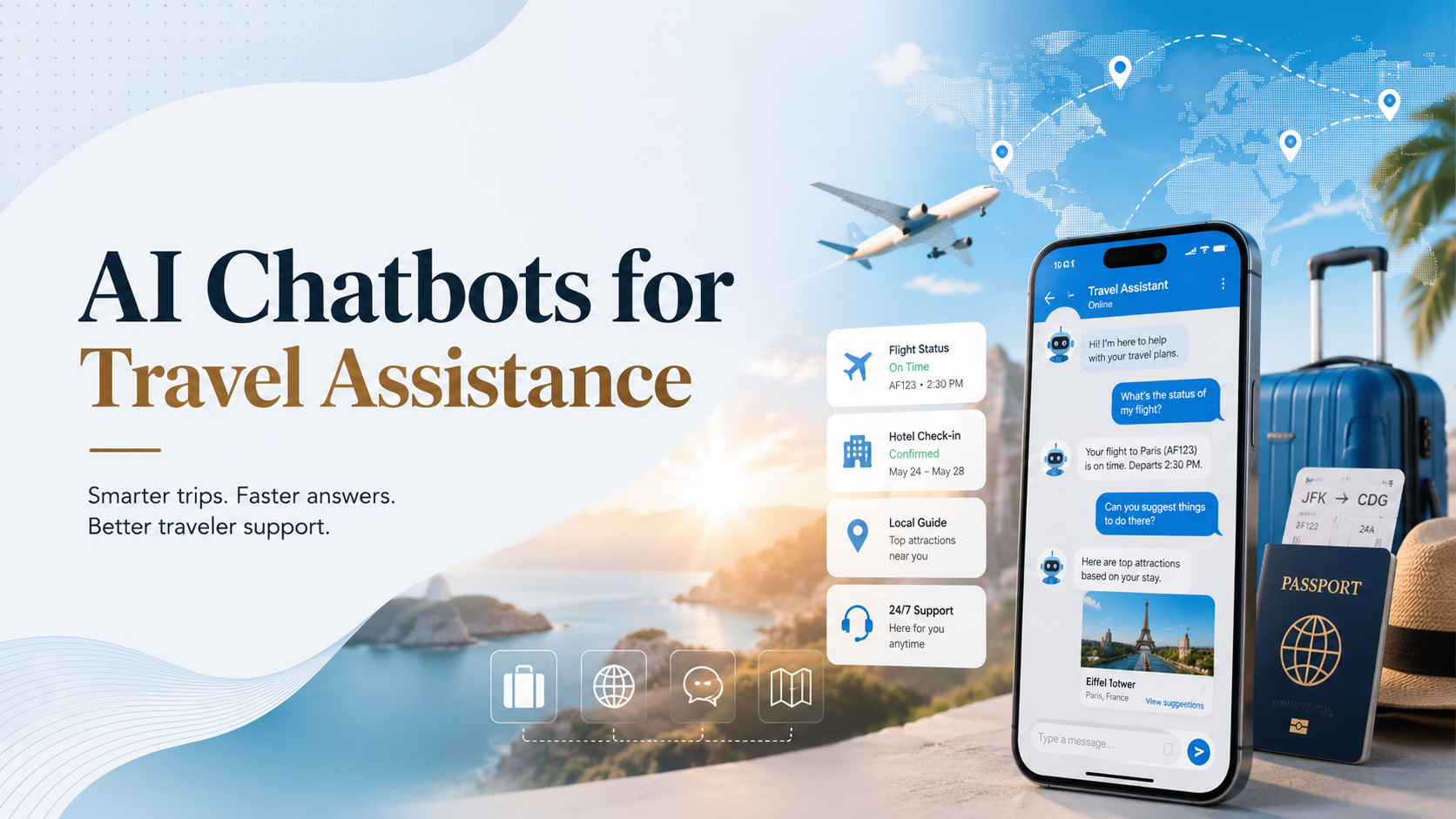
Travel planning has become more complex for both customers and businesses. A traveller may compare flights, hotels, visa requirements, local transport, weather, promotions, loyalty points, and destination activities before making a decision. For travel agencies, hotels, airlines, tourism operators, and destination marketers in Malaysia, this creates a commercial challenge: how do you respond quickly, consistently, and personally without increasing operating costs at the same pace?
This is where AI Chatbots for Travel Assistance are becoming strategically important. The value is not only in answering common questions. A well-planned chatbot can support the customer journey from early research to booking, itinerary changes, upsell opportunities, post-trip feedback, and repeat engagement. For businesses serving international tourists, domestic travellers, corporate clients, or niche travel segments, the chatbot can act as a scalable front line that keeps conversations moving even outside office hours.
The opportunity is especially relevant now because customer expectations have changed. People are used to instant replies, personalised recommendations, and self-service options. If a potential customer has to wait too long for a basic answer, they may move to another provider. At the same time, travel products are not always simple. Pricing changes, package inclusions, seasonal availability, group requirements, cancellation terms, and destination-specific details all affect conversion. A chatbot must therefore be more than a generic FAQ tool. It needs a clear business role.
From Blackstone Consultancy's perspective, the starting point is strategy, not software. We would first assess where the travel business is losing time, leads, or revenue: enquiry handling, quotation delays, repetitive WhatsApp messages, abandoned booking journeys, poor lead qualification, or inconsistent follow-up. Then we would identify which parts of the customer journey are suitable for automation and which still require human sales or service teams.
A practical travel chatbot strategy should also consider brand positioning. A premium tour provider should not sound like a low-cost booking engine. A hotel group may need to protect direct bookings. A tourism board may need multilingual destination guidance. A B2B travel operator may need structured lead capture for corporate enquiries. Each use case requires different conversation flows, integrations, content governance, and escalation rules.
For Malaysian businesses, the real question is not whether chatbots are trendy. The question is whether they can reduce friction, improve response quality, capture better customer data, and support profitable growth in a competitive travel market. Done properly, chatbot deployment becomes part of a wider digital growth system, not just another website feature.
What The Market Is Really Responding To
This market pressure becomes sharper when brands prepare travel disruption chatbot escalation for delays, cancellations, and uncertainty.
Travel customers are not responding to "AI" as a novelty. They are responding to speed, certainty, relevance, and reduced friction. For Malaysian travel brands, hotels, tour operators, destination marketers, and agencies, the commercial opportunity is not simply installing a chatbot. It is understanding where customer hesitation happens and using automation to remove it before the enquiry is lost.
Customer Behaviour Is Moving Toward Instant Clarification
Travellers often browse across several tabs, compare prices, check reviews, ask friends, and revisit options over several days. During that process, small unanswered questions can delay or stop a booking: visa requirements, family suitability, airport transfers, prayer facilities, refund policies, luggage limits, weather concerns, or whether an itinerary is realistic.
This is where AI Chatbots for Travel Assistance become commercially relevant. The value is not in replacing human sales teams, but in handling repetitive pre-sales questions at the exact moment of interest. A customer who receives a clear answer within seconds is more likely to continue the journey than one who must wait for office hours or send a WhatsApp message with no immediate reply.
Category Signals Show A Demand For Personalisation
Travel is a high-consideration category. Customers rarely want a generic package; they want something that fits their dates, budget, group size, preferences, and comfort level. Families, business travellers, Muslim travellers, retirees, honeymooners, and corporate groups all assess travel differently.
Brands that can respond with more relevant suggestions appear more attentive and organised. This affects perception even before a sale happens. A chatbot that can guide users toward suitable destinations, explain package differences, or qualify enquiries helps the brand feel more consultative rather than transactional.
Brand Perception Depends On Trust, Not Just Automation
In travel, poor information can damage confidence quickly. If a chatbot gives vague, outdated, or overly enthusiastic answers, customers may question the entire brand. The market is therefore responding to reliable assistance, not flashy automation.
Businesses need to ensure that chatbot responses reflect actual policies, current offers, local context, and operational limits. The tone should also match the brand: premium, family-friendly, corporate, adventurous, or budget-conscious. For marketing teams, this connects closely with content strategy, social proof, and campaign messaging. A social media agency can support this by aligning chatbot conversations with the same positioning used across ads, posts, and landing pages.
Commercial Intent Is Closest To Action
The strongest buying signals often appear in the questions customers ask: "Is this available in June?", "Can I bring children?", "What is included?", "Can you customise this?", or "How much for four people?" These are not casual content interactions. They are signals of intent.
Businesses that capture, organise, and respond to these enquiries quickly can improve lead quality and sales follow-up. The real market response is clear: customers want travel planning to feel easier, safer, and more personal before they commit.
The Strategic Pattern Beneath The Surface
A practical travel chatbot should be informed by traveller journey analysis with chatbots, not only by a static FAQ list.
The rise of **AI Chatbots for Travel Assistance** is not simply a technology trend. It reflects a wider commercial pattern: customers want faster answers, clearer choices, and more confidence before they commit. For Malaysian travel brands, hotels, transport providers, education tour operators, medical tourism teams, and destination marketers, the real opportunity is not "having a chatbot". It is using conversational support to match how people now research, compare, and decide.
Positioning: From Information Provider To Decision Helper
Many travel businesses still position themselves around inventory: rooms, packages, routes, destinations, or promotions. The problem is that customers rarely begin with inventory. They begin with uncertainty.
They may ask:
- "Is this suitable for my family?"
- "Can I travel during school holidays?"
- "What is the best option if I have elderly parents?"
- "How much should I budget?"
- "What happens if plans change?"
A chatbot becomes commercially useful when it supports this decision process. The stronger positioning is not "we offer many travel options", but "we help you choose the right journey with less confusion".
Offer Design: Packaging Around Intent
Search demand often reveals intent more clearly than internal sales categories. A Malaysian business may organise offers by product type, but customers search by situation: honeymoon, company retreat, Muslim-friendly travel, student group, senior-friendly itinerary, visa support, family holiday, or weekend escape.
This changes offer design. Instead of presenting one long list of packages, businesses can build guided pathways based on traveller type, budget range, date flexibility, destination preference, and support needs. The chatbot then becomes a structured sales assistant, not just a question-answer tool.
Content: Answering Before Selling
Travel content must do more than inspire. It must reduce doubt. Useful content explains trade-offs: when to book, what documents are needed, what costs are commonly missed, which season suits which traveller, and what level of support is included.
This is where chatbot data can inform content planning. Repeated questions from users can point to missing landing page sections, unclear package descriptions, weak FAQ coverage, or friction in the enquiry process.
Conversion Behaviour: Speed, Trust, And Next Step Clarity
In travel, hesitation often appears before payment or enquiry. Customers may compare multiple providers, ask family members, or wait for confirmation on dates and costs. A chatbot can improve conversion behaviour when it gives quick clarification and then moves the user to a suitable next step: quotation, WhatsApp conversation, booking form, itinerary consultation, or human agent handover.
The strategic pattern is clear: connect search demand to user intent, shape offers around real travel decisions, publish content that removes uncertainty, and design chatbot conversations that guide-not pressure-the customer.
Audience, Message, And Channel Fit
Retention-focused operators can use repeat traveller loyalty conversations to keep useful guidance flowing after the first booking.
For Malaysian travel brands, the value of AI Chatbots for Travel Assistance depends less on the technology itself and more on whether the right audience receives the right message at the right moment. A hotel group, tour operator, airline partner, travel agency, or destination marketer should not speak to every user in the same way. Each segment has different concerns, buying signals, and tolerance for automation.
Segment The Audience By Intent, Not Just Demographics
A useful starting point is to separate audiences by decision stage. Problem-aware buyers may be frustrated by slow enquiry handling, repetitive WhatsApp questions, missed bookings after office hours, or inconsistent service between branches. They need a practical explanation of what a chatbot can handle and where human staff still remain involved.
Comparison-stage buyers are more advanced. They may already be reviewing vendors, platforms, or internal development options. This group needs evidence around integration, language support, escalation rules, data handling, operating costs, and implementation scope.
Existing customers are different again. They may not care how the system works; they care whether they can amend bookings, check itineraries, request recommendations, or get support quickly. The message should be simple: faster answers, clearer options, and less waiting.
Internal stakeholders, including operations, sales, customer service, and finance teams, need a separate message. They will ask whether the system reduces manual workload, improves consistency, and fits current processes without creating more administrative burden.
Match The Message To The Decision Stage
At the awareness stage, focus on operational pain points. Examples include high enquiry volume during school holidays, delays in replying to overseas travellers, and repetitive questions about packages, visas, transport, check-in times, or cancellation terms.
At the consideration stage, the message should become more specific. Marketing teams can explain how enquiries are qualified, how conversations move from chatbot to staff, what happens when the bot does not know the answer, and how brand tone is controlled.
At the decision stage, avoid vague promises. Business owners will want clarity on rollout timeline, content preparation, staff training, maintenance, reporting, and risk management. A serious commercial message should show what needs to be prepared before launch.
Choose Channels Based On Behaviour
Search content works well for prospects actively researching solutions. LinkedIn is useful for reaching management, tourism boards, B2B travel partners, and corporate decision-makers. Email is effective for nurturing existing leads with implementation guides or checklists. WhatsApp, website chat, and booking pages are stronger for live customer assistance and conversion support.
The strongest strategy connects these channels instead of treating them separately. A user may discover the idea through search, compare options through a case-style article, ask detailed questions on WhatsApp, and only then request a proposal. The content plan should support that full journey.
What Malaysian Businesses Can Apply
Behind the scenes, frontline travel team messaging bots help staff keep answers consistent across counters, WhatsApp, and call centres.
AI travel assistance is not only relevant to airlines, hotels, and tourism boards. The same principles can help Malaysian businesses improve customer experience, reduce friction, and turn online attention into qualified enquiries. For marketing teams, the practical opportunity is to connect automation, content, and conversion instead of treating chatbots as a novelty.
Build Around Real Customer Questions
Start with the questions your customers already ask on WhatsApp, Instagram, Facebook, website forms, and sales calls. For a travel brand, this may include itinerary planning, visa reminders, hotel options, transport, or weather guidance. For other industries, it could be pricing, appointment availability, product fit, delivery areas, financing, or after-sales support.
A useful chatbot should not try to answer everything. It should handle common enquiries clearly, collect the right information, and guide users to the next step. Malaysian businesses can use this approach to shorten response time while keeping human teams focused on higher-value conversations.
Connect Social Media to Conversion
Many campaigns generate comments, direct messages, and clicks, but the follow-up process is often inconsistent. A chatbot can support social media campaigns by qualifying leads from ads, answering basic questions, and routing prospects to the right salesperson or booking channel.
For example, a tourism operator promoting Langkawi packages could use AI Chatbots for Travel Assistance to ask about travel dates, group size, budget range, and preferred activities before handing the enquiry to a consultant. The same model can be adapted for education, property, healthcare, professional services, and retail campaigns.
This is where a strong digital marketing strategy matters. The chatbot should support the campaign objective, not sit separately from it. Landing pages, ad copy, retargeting audiences, CRM fields, and sales scripts should all work from the same customer journey.
Localise for Malaysian Buying Behaviour
Malaysia is a multilingual and mobile-first market. Businesses should consider language preferences, local payment habits, public holidays, regional differences, and platform usage. A chatbot that feels too generic may reduce trust, especially for higher-value purchases.
Localisation does not always require complex technology. It can include Malay and English response options, location-based recommendations, business-hour expectations, clear escalation to human support, and culturally appropriate tone. The goal is to make digital interactions feel useful, not robotic.
Measure What Matters
Avoid judging chatbot performance only by the number of conversations. Track commercial indicators such as qualified enquiries, booking requests, abandoned conversations, frequently asked questions, handover quality, and conversion after human follow-up.
For Malaysian business owners, the key lesson is simple: AI should remove friction from the customer journey. When paired with good content, media planning, and sales alignment, chatbots can become a practical part of marketing operations rather than a disconnected technology experiment.
Measurement That Keeps The Strategy Honest
If the business runs destination talks or sales sessions, destination webinar chatbot nurture can be measured as part of the same enquiry path.
A chatbot strategy should not be judged only by whether it looks modern. For Malaysian travel brands, hotels, tour operators, transport providers, and destination marketers, the better question is whether the assistant improves discovery, supports real customer decisions, and reduces friction in daily operations.
Search Signals: Are The Right Travellers Finding You?
Start by measuring whether content around **AI Chatbots for Travel Assistance** is attracting relevant search demand. Track keyword visibility, impressions, click-through rates, and the pages that bring users into the journey. More importantly, review search intent. A visitor searching for "Langkawi family itinerary" may need planning support, while someone searching "airport transfer from KLIA to Genting" may need a fast booking path.
Useful search measurements include:
- Landing pages that initiate chatbot conversations
- Queries that lead to high-quality enquiries
- Content gaps revealed by repeated chatbot questions
- Pages with traffic but poor conversion into meaningful actions
Search data should guide both content planning and chatbot training. If travellers repeatedly ask about visa rules, halal food, luggage transfer, local transport, or refund policies, those topics deserve clearer website content and more precise chatbot responses.
Engagement Quality: Are Conversations Helping Or Distracting?
Volume alone can be misleading. A high number of chats may indicate interest, but it may also reveal poor navigation or unclear service information. Review conversation depth, completion rates, escalation requests, and unanswered questions.
Look for signs that the chatbot is improving the experience, such as users reaching itinerary suggestions, pricing information, booking forms, or human support with less confusion. Also monitor negative signals: repeated rephrasing, abandoned chats, irrelevant answers, or customers asking to "speak to a person" too early.
Lead Quality And Commercial Value
Marketing teams should connect chatbot activity to CRM outcomes where possible. Track which conversations produce qualified leads, confirmed bookings, corporate enquiries, upsell opportunities, or repeat customers. For B2B travel services, lead quality may matter more than lead volume.
Review whether chatbot-assisted leads include useful details: travel dates, group size, budget range, destination preference, accessibility needs, or corporate requirements. These details help sales teams respond faster and with better context.
Operational Signals And Review Loops
A practical measurement system includes operational feedback. Customer service teams should flag recurring issues, outdated answers, policy confusion, and seasonal changes. Marketing should review search and engagement data monthly, while operational teams validate whether chatbot answers still match current packages, prices, routes, and availability.
The aim is not to set and forget. The strongest chatbot programmes use repeatable review loops: measure, diagnose, update, test, and document. That discipline keeps the strategy commercially useful instead of becoming another digital feature that looks impressive but quietly underperforms.
Risks, Trade-Offs, And Better Questions
AI can make travel planning faster, but speed is not the same as commercial value. Before investing in **AI Chatbots for Travel Assistance**, Malaysian businesses should separate what looks impressive from what actually reduces friction, protects margin, or improves customer confidence.
Do Not Copy A Visible Tactic Without The Business Logic
A competitor may launch a chatbot that recommends hotels, builds itineraries, or answers travel questions in multiple languages. That does not mean the same feature belongs in your business. Their audience, booking process, supplier relationships, and support capacity may be very different from yours.
The better question is not, "Can we build this?" It is, "Where does the customer hesitate, repeat questions, abandon the journey, or require staff intervention?" If the chatbot does not address one of those points, it may become a novelty rather than a useful commercial asset.
Watch For Hidden Operational Risks
Travel advice can quickly become sensitive. Visa rules, refund terms, destination safety, pricing, availability, and airline conditions can change. A chatbot that gives confident but outdated answers can create service disputes, reputational damage, or compliance concerns.
Teams should define what the chatbot is allowed to answer, what must be escalated to a human, and which sources are approved. This is especially important for travel agencies, hospitality groups, transport operators, and tourism-related businesses that deal with cross-border customers.
A practical chatbot should be designed with boundaries. It should know when to stop, clarify, or hand over.
Keep The Commercial Case Grounded
AI should not be measured only by engagement or conversation volume. More chats are not automatically better. A chatbot that attracts casual questions but does not support enquiries, bookings, upgrades, or service efficiency may add cost without improving outcomes.
Useful metrics may include qualified enquiry rate, booking support completion, reduction in repetitive support tasks, response accuracy, escalation quality, and customer satisfaction after the interaction. These should be reviewed regularly because travel behaviour changes with seasonality, campaigns, public holidays, and market conditions.
Ask Better Questions Before Building
Before committing budget, teams should ask:
- Which customer decisions need better support?
- What information must always be accurate?
- Which answers require human approval?
- How will errors be detected and corrected?
- What business process changes are needed behind the chatbot?
- How will success be measured beyond clicks and conversations?
The strongest AI travel tools are not built around hype. They are built around clear use cases, reliable content, operational discipline, and a realistic understanding of what customers need before they commit.
A Practical Roadmap For Turning The Insight Into Action
Travel brands can also use travel training chatbot lessons to keep agents and customers informed before more complex automation is introduced.
For Malaysian business owners and marketing teams, the opportunity is not simply to "add a chatbot". The real task is to convert changing traveller expectations into a clearer service model, stronger content strategy, and measurable commercial improvement. Use the next planning cycle to move from observation to execution.
1. Start With The Traveller Moments That Matter
Map the customer journey from first search to post-trip support. Identify where customers need speed, reassurance, comparison, or human help. Common moments include destination research, itinerary planning, visa or document questions, pricing clarification, booking changes, local recommendations, and emergency support.
This step prevents the business from building technology around assumptions. It also helps teams decide where automation can improve service and where a human agent should remain central.
2. Turn Questions Into Business Assets
Review enquiries from WhatsApp, website forms, social media comments, sales calls, and email. Group them into themes: pricing, availability, safety, family travel, Muslim-friendly travel, corporate travel, transport, refunds, and special requests.
These questions should inform three areas:
- Service design: what needs to be clearer or easier to buy
- Content planning: what articles, landing pages, or FAQs should exist
- Sales enablement: what scripts and responses teams should standardise
This is where AI Chatbots for Travel Assistance can support the business, but only after the company understands the real questions customers are asking.
3. Define The Pilot Before Selecting Tools
Before comparing platforms, define the pilot scope. Choose one market, one service line, or one customer segment. For example, a travel agency may begin with inbound tour enquiries, while a hotel group may focus on pre-arrival guest questions.
Set practical success measures, such as:
- Faster response time during peak enquiry periods
- Better qualification of leads before sales follow-up
- Reduced repetition in customer service conversations
- More complete customer data for remarketing
- Higher clarity in package or itinerary selection
4. Align Marketing, Sales, And Operations
A chatbot or AI assistant should not sit only under marketing. Sales must guide qualification logic. Operations must confirm what information is accurate. Management must approve escalation rules, tone of voice, and risk boundaries.
For Malaysian companies serving both local and international travellers, language, cultural context, payment preferences, and service expectations should also be reviewed carefully.
5. Review, Improve, Then Scale
At the end of the cycle, study conversation logs, unresolved questions, handover points, and customer feedback. Use those findings to improve content, refine packages, train teams, and decide whether to expand the system.
The businesses that benefit most will be those that treat insight as a management discipline-not a trend to observe, but a decision-making tool to act on.