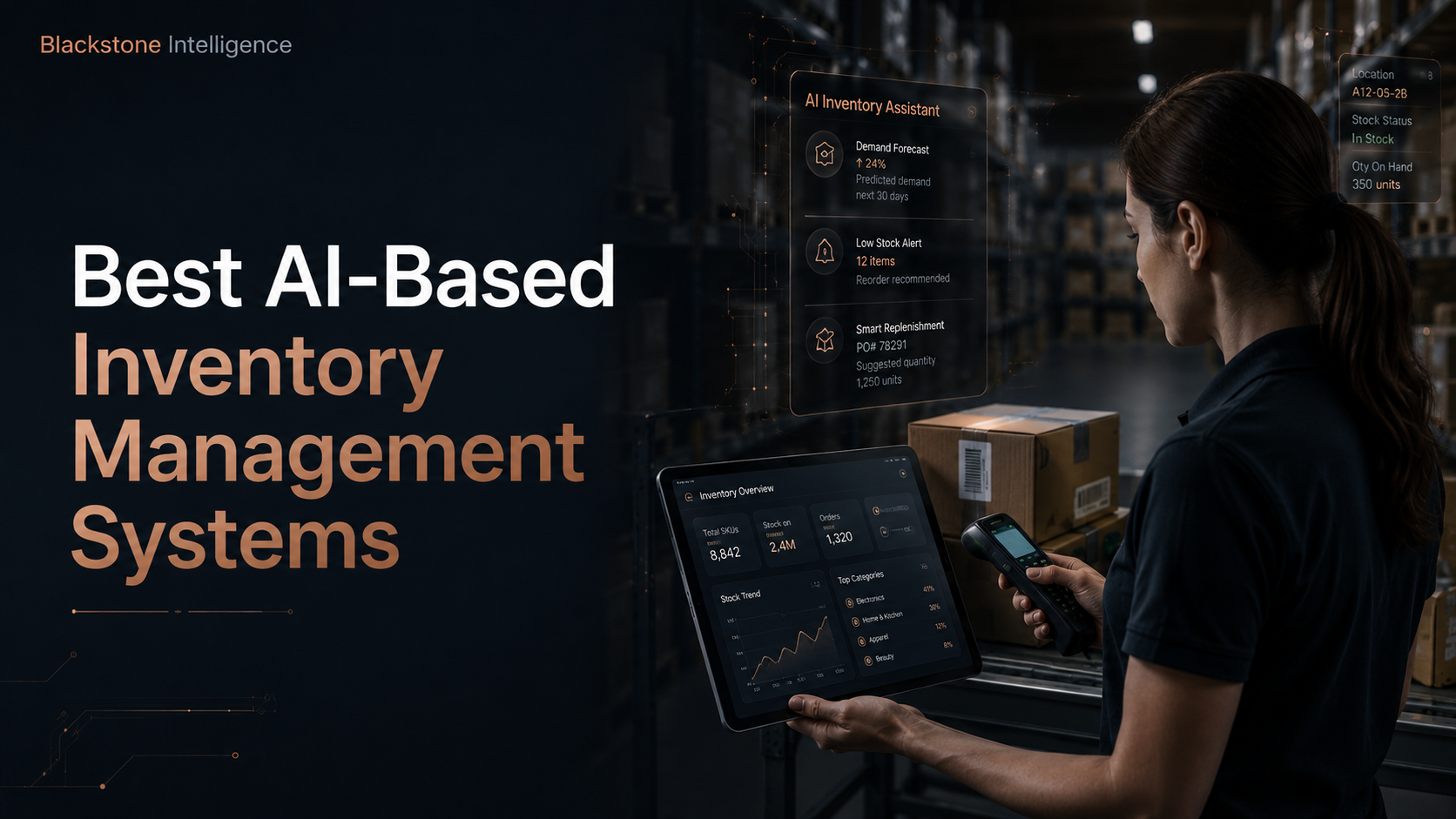
Inventory has become a board-level issue for Malaysian companies. Rising operating costs, tighter customer expectations, marketplace-driven fulfilment pressure, and more complex supplier networks have made manual stock control increasingly risky. For retailers, distributors, manufacturers, F&B operators, and omnichannel businesses, the problem is no longer simply "how much stock do we have?" It is whether inventory decisions are helping or restricting growth.
AI-based inventory management systems are attracting attention because they promise better forecasting, faster replenishment decisions, improved stock visibility, and fewer avoidable stockouts or overstocks. However, choosing the right platform is not just a software comparison exercise. A system that works well for a single-outlet retailer may not suit a multi-warehouse distributor. A tool built for point-of-sale efficiency may not offer the planning depth required by a manufacturer. The "best" solution depends on business model, operational maturity, data quality, integration needs, and growth plans.
This is where many Malaysian businesses need a more strategic lens. The search for the **Best AI-Based Inventory Management Systems** should begin with commercial objectives, not feature lists. A company should first ask: where is inventory currently limiting revenue, margin, cash flow, customer satisfaction, or team productivity? Only then can technology be assessed against real business outcomes.
From Blackstone Consultancy's perspective, the right analysis should cover four areas:
- **Growth fit:** whether the system supports expansion into new outlets, channels, regions, or product categories.
- **Operational fit:** how well it handles purchasing, warehouse workflows, stock transfers, returns, expiry, batch control, or demand variability.
- **Data readiness:** whether the company has reliable sales, stock, supplier, and product data for AI-assisted recommendations to be meaningful.
- **Commercial impact:** how the system may affect working capital, fulfilment performance, labour efficiency, and decision speed.
For Malaysian business owners and marketing teams, this matters because inventory performance directly affects brand experience. A campaign that drives demand but exposes stock gaps can damage customer trust. Conversely, over-ordering for promotions can trap cash in slow-moving products. Better inventory intelligence helps align marketing, sales, procurement, and operations around the same demand picture.
This guide approaches AI inventory systems as strategic growth infrastructure. The aim is not to chase technology for its own sake, but to help Malaysian companies understand which platforms, capabilities, and implementation priorities are most likely to support sustainable commercial performance in 2026 and beyond.
What The Market Is Really Responding To
The search demand around the Best AI-Based Inventory Management Systems is not only about software comparison. It reflects a deeper commercial shift: Malaysian companies are under pressure to make stock decisions faster, reduce manual errors, and protect margins in a market where customer expectations are increasingly unforgiving.
For business owners, inventory is no longer a back-office issue. It directly affects cash flow, fulfilment speed, customer reviews, marketplace ratings, and branch-level profitability. When buyers research AI inventory tools, they are often trying to solve operational friction that has already become visible to customers.
Customer Behaviour Is Driving The Upgrade
Today's customers expect product availability to be accurate across stores, websites, marketplaces, and delivery channels. If an item is shown as available but cannot be fulfilled, the customer does not blame the warehouse. They blame the brand.
This is especially important for retailers, F&B operators, distributors, pharmacies, consumer goods sellers, and multi-outlet businesses. Customers are comparing experiences across platforms, not just within one industry. A small business with slow stock updates may be judged against the convenience of larger ecommerce players.
As a result, inventory technology is becoming part of the customer experience strategy. Businesses are not only asking, "Can this system track stock?" They are asking, "Will this help us avoid disappointing customers?"
Category Signals: What Buyers Are Looking For
The strongest market signals are practical. Malaysian buyers tend to respond to systems that promise better visibility, easier integration, and clearer decision-making. Common buying triggers include:
- Too much capital tied up in slow-moving stock
- Frequent stockouts despite "available" system records
- Manual spreadsheet dependence across branches or warehouses
- Poor coordination between sales, purchasing, and operations teams
- Difficulty forecasting demand during campaigns, festive periods, or seasonal peaks
- Lack of real-time reporting for management decisions
AI becomes attractive when it is positioned as a business control tool, not a technical novelty. The winning message is not "advanced automation" for its own sake. It is fewer surprises, better planning, and more confident purchasing.
Brand Perception And Commercial Intent
Companies searching this topic are usually in an evaluation mindset. They may not be ready to buy immediately, but they are comparing providers, reading guides, and building internal justification. This creates an opportunity for brands to educate before selling.
For technology vendors and consultants, strong content should address business outcomes, implementation concerns, and sector-specific use cases. Marketing teams should also recognise that decision-makers may discover solutions through search, LinkedIn, industry content, and social proof. Working with a capable social media agency can help turn technical value into clearer market positioning.
The commercial intent is clear: businesses want inventory systems that reduce waste, improve service reliability, and support growth without adding unnecessary complexity.
The Strategic Pattern Beneath The Surface
The market for **Best AI-Based Inventory Management Systems** is not only a software comparison topic. It reflects a broader commercial pattern: Malaysian businesses are trying to reduce uncertainty in stock planning, while vendors are competing to be seen as the safest operational choice.
This means the winning brands are not simply those with the longest feature lists. They are the ones that connect inventory pain points to business outcomes in language that owners, finance teams, operations managers, and branch leaders can all understand.
1. Positioning Is Moving From "System Features" To "Operational Control"
Many inventory software brands still lead with modules, dashboards, automation, barcode scanning, or ERP integration. These matter, but they are not the real buying trigger.
The deeper concern is control: avoiding stockouts, reducing over-ordering, improving cash flow, tracking branch performance, and making purchasing decisions with less guesswork. In Malaysia, where many businesses operate across retail outlets, warehouses, marketplaces, and supplier networks, the most persuasive positioning is practical rather than futuristic.
A stronger message is not "AI-powered inventory". It is: "Know what to buy, when to buy, and where stock is moving before it becomes a problem."
2. Offer Design Must Match Business Maturity
Search demand often mixes very different buyers in one category. A small F&B operator, a pharmacy chain, a distributor, and a manufacturer may all search for AI inventory tools, but they are not buying the same solution.
This creates an opportunity for clearer offer design. Vendors should separate entry-level needs from enterprise needs:
- SMEs want faster setup, simple reporting, affordability, and local support.
- Multi-branch retailers want stock visibility, purchasing controls, and POS integration.
- Distributors need forecasting, warehouse coordination, supplier planning, and approval workflows.
- Manufacturers may require production planning, raw material tracking, and ERP-level integration.
When a page treats all buyers the same, conversion quality drops. When it helps visitors self-identify quickly, enquiry quality improves.
3. Content Should Reduce Perceived Risk
For this category, buyers are usually not looking for entertainment or broad education. They want confidence. Content should answer the practical questions that slow down decision-making:
- Will this work with our existing POS, accounting, or ERP setup?
- How long will implementation take?
- What happens to current stock data?
- Can the system handle multiple outlets or warehouses?
- What support is available locally?
- How is pricing structured as the business grows?
The best content does not overpromise. It explains trade-offs clearly and shows which type of system fits which type of operation.
4. Conversion Behaviour Is Trust-Led
Most serious buyers will not convert from a generic "Book a demo" button alone. They need evidence that the vendor understands their operating model.
For Malaysian businesses, the most useful conversion path usually includes a comparison guide, a readiness checklist, a consultation option, and clear next steps. The strategic pattern is simple: match the search intent, segment the buyer, remove implementation anxiety, then invite a commercial conversation.
Audience, Message, And Channel Fit
For Malaysian businesses evaluating the **Best AI-Based Inventory Management Systems**, the buying journey is rarely owned by one person. A retail founder may care about stockouts and cash flow, while a finance lead wants margin control, a warehouse manager wants cleaner operations, and an IT team wants integration clarity. Strong marketing should therefore match the message to the audience's level of awareness and decision authority.
Segment The Audience By Buying Readiness
Problem-aware buyers are usually reacting to visible pain: slow stock counts, excess inventory, missed replenishment, poor branch visibility, or manual spreadsheet work. They may not be searching for "AI" yet. Content for this group should explain the business cost of inventory inaccuracy and show how forecasting, automation, and real-time stock visibility reduce operational drag.
Comparison-stage buyers are already shortlisting vendors. They need structured evaluation support: feature checklists, deployment considerations, integration questions, pricing model explanations, and Malaysian business-fit criteria such as multi-outlet support, GST/SST-ready reporting where relevant, local implementation support, and compatibility with POS, accounting, ecommerce, or ERP systems.
Existing customers are often overlooked. They need education on adoption, staff usage, report interpretation, and how to expand from basic inventory tracking into forecasting, demand planning, or supplier performance monitoring. This audience responds well to practical guides, onboarding content, webinars, and account-based communication.
Internal stakeholders influence the final decision even when they are not the buyer. Finance, operations, procurement, IT, and senior management each require different proof. A commercial page that only speaks to "business owners" may miss the people who approve budgets, manage implementation risk, or operate the system daily.
Match The Message To The Decision Stage
At the awareness stage, lead with business pain and operational consequences. Avoid overloading the reader with technical AI language. At the consideration stage, compare system capabilities in plain terms: forecasting, automated reorder points, batch or expiry tracking, multi-location visibility, dashboarding, and integration options. At the decision stage, the message should shift toward implementation confidence: timeline, data migration, training, support, and governance.
Choose Channels That Support Real Buying Behaviour
Search content is useful for capturing active demand, especially guides, comparisons, and vendor category pages. LinkedIn can support B2B credibility for distribution, manufacturing, and enterprise audiences. Email works well for nurturing leads that need internal discussion before committing. Webinars and demos help when the system requires operational buy-in across departments. For SMEs, WhatsApp follow-up and direct consultations may still play an important role, provided the conversation is informed by clear educational content rather than generic sales scripts.
What Malaysian Businesses Can Apply
AI inventory tools are not only an operations upgrade. Used properly, they can improve how a Malaysian business plans campaigns, manages promotions, protects margins, and responds to customer demand across online and offline channels. The key is to connect inventory visibility with marketing decisions instead of treating stock data as a back-office concern.
Align Campaign Planning With Real Stock Availability
Before launching festive campaigns, payday promotions, marketplace sales, or social media ads, marketing teams should know which products are available, slow-moving, seasonal, or at risk of selling out. This helps prevent wasted ad spend on items that cannot be fulfilled and avoids disappointing customers after they click through from an ad.
For retailers, F&B brands, distributors, and eCommerce businesses, inventory data should guide which products are promoted, bundled, discounted, or held back. A social media agency can then plan content calendars around stock priorities, such as pushing high-margin items, clearing ageing inventory, or creating urgency for limited-quantity products.
Use Demand Signals to Shape Marketing Messages
AI-based inventory systems can help identify demand patterns, but businesses still need to translate those patterns into market-facing action. If certain products perform better during school holidays, festive periods, monsoon months, or specific local events, marketing teams can prepare campaigns earlier and with more relevant messaging.
This is where digital marketing becomes more commercially useful. Instead of promoting products based only on creative preference, campaigns can be built around actual demand signals. Search ads, social media content, email marketing, and retargeting campaigns can all be adjusted based on what customers are likely to need and what the business is ready to supply.
Improve Promotion Discipline Across Channels
Many Malaysian businesses sell through multiple channels, including physical outlets, websites, Shopee, Lazada, TikTok Shop, WhatsApp, and distributors. Without inventory coordination, promotions can become inconsistent or operationally risky.
Marketing teams should set clear rules before campaigns go live: which SKUs are included, how much stock is allocated per channel, when ads should pause, and who approves changes if demand spikes. This prevents over-promotion and helps maintain customer trust.
Turn Inventory Insight Into Better Content
The Best AI-Based Inventory Management Systems can provide useful internal intelligence, but the business value increases when teams act on it. Slow-moving products may need educational content, comparison posts, influencer demonstrations, or bundle offers. Fast-moving items may need urgency-led messaging, waitlist campaigns, or replenishment updates.
For business owners, the practical move is simple: bring operations, sales, and marketing into the same planning conversation. Inventory data should influence campaign strategy, not merely report what happened after the campaign ends.
Measurement That Keeps The Strategy Honest
Choosing from the **Best AI-Based Inventory Management Systems** is not only a software comparison exercise. The decision should be measured against whether the system improves commercial visibility, reduces avoidable friction, and supports better decisions across sales, purchasing, finance, and operations.
Search Signals: What Buyers Are Actually Looking For
Start by reviewing search behaviour around inventory pain points, not just software names. Malaysian businesses may search for stock forecasting, multi-branch inventory control, barcode inventory, warehouse automation, POS integration, or ERP inventory modules. These searches reveal the practical problems buyers want solved.
Marketing teams should track which topics attract qualified traffic, which pages generate enquiries, and which search terms indicate purchase readiness. A visitor searching for "inventory system for retail outlets" may need education, while someone comparing vendors or requesting implementation support is much closer to action.
Engagement Quality: Beyond Page Views
High traffic is not enough. Measure whether visitors spend time on comparison sections, pricing explanations, implementation guides, integration details, and industry-specific use cases. These behaviours suggest that the content is helping buyers evaluate risk and fit.
Useful engagement indicators include scroll depth, repeat visits, demo clicks, form starts, downloaded checklists, and interactions with ROI or readiness content. If visitors leave after reading only broad claims, the page may be too generic. If they move from education to evaluation, the content is doing its job.
Lead Quality: Measuring Commercial Fit
Not every enquiry is valuable. Track whether leads match the intended customer profile: business size, number of outlets, warehouse complexity, product volume, integration needs, and budget readiness. A smaller retailer may need a fast POS-linked stock system, while a distributor may need deeper purchasing, batching, and fulfilment controls.
Sales teams should feed back which content produced serious conversations, which attracted poor-fit enquiries, and which questions prospects repeatedly asked. This helps refine page sections, FAQs, comparison tables, and call-to-action placement.
Operational Signals: Proof After The Click
For businesses implementing inventory technology, marketing claims should be checked against operational outcomes. Review stock discrepancy trends, replenishment accuracy, order fulfilment delays, manual reporting workload, and adoption by frontline users.
The system may look strong in a vendor demo, but weak adoption by staff can limit its value. Measurement should include both technical performance and day-to-day usability.
Repeatable Review Loops
Set a monthly review for search and engagement data, and a quarterly review for lead and operational quality. Keep the loop simple: identify what buyers search for, observe what they engage with, compare lead quality, then update the content and sales process accordingly. This prevents strategy from becoming opinion-led and keeps decisions grounded in real market behaviour.
Risks, Trade-Offs, And Better Questions
AI inventory software can improve control, but it can also create expensive confusion if the business treats it as a shortcut rather than an operating system decision. Before choosing from any list of the **Best AI-Based Inventory Management Systems**, Malaysian companies should slow down and test whether the recommendation fits their actual cost structure, sales channels, warehouse maturity, and management discipline.
Do Not Copy A Visible Tactic Without The Operating Context
A competitor may appear more advanced because it uses automated replenishment, demand forecasting, barcode workflows, or integrated POS reporting. That does not mean the same setup will work for your business.
The right question is not "What system are they using?" It is:
- How clean is their stock data?
- How many SKUs do they manage?
- Do they have one outlet, multiple branches, or warehouse-to-store transfers?
- Are they forecasting stable demand or seasonal, promotion-driven demand?
- Who checks exceptions when the system produces unusual recommendations?
- Is their team trained enough to trust the data without blindly following it?
Copying the visible tool without copying the discipline behind it often leads to poor adoption, duplicated work, and management frustration.
Watch The Hidden Trade-Offs
AI-based systems usually promise better visibility, faster decisions, and reduced manual work. Those benefits are real only when the business accepts the trade-offs.
More automation may require stricter data entry. Better forecasting may require historical sales and stock records to be cleaned. Deeper integration may mean higher implementation time, staff training, and dependency on vendor support. A cheaper system may look attractive at first, but become costly if it cannot handle future branches, multiple warehouses, approval controls, or accounting integration.
For SMEs in Malaysia, the commercial issue is not whether the system has many features. It is whether those features reduce stockouts, overstocking, dead inventory, manual reconciliation, and management blind spots.
Stay Grounded In Business Outcomes
Before committing, teams should define what success looks like in financial and operational terms. For example: fewer emergency purchases, clearer reorder points, better branch-level visibility, faster month-end checks, or improved stock accuracy.
A strong selection process should include a pilot, user feedback, implementation timeline, data migration review, and clear ownership. The system should support better decisions, not become another dashboard that nobody acts on.
The safest approach is to choose based on business fit, not hype. AI can improve inventory performance, but only when leadership, process, data, and accountability are ready to support it.
A Practical Roadmap For Turning The Insight Into Action
Selecting technology is only one part of the decision. The bigger commercial question is how inventory intelligence will change purchasing, pricing, sales planning, fulfilment, and customer communication. For Malaysian business owners and marketing teams, the next planning cycle should connect operational visibility with clearer market positioning and measurable business outcomes.
1. Define The Business Problem Before Comparing Systems
Start by identifying where inventory issues are affecting revenue or customer experience. Common examples include stockouts during campaign periods, slow-moving items tying up cash, poor branch-level visibility, inaccurate demand forecasts, or manual reporting delays.
Before reviewing the **Best AI-Based Inventory Management Systems**, leadership should agree on three priorities:
- Which inventory problems are costing the business the most?
- Which departments need better visibility: sales, finance, operations, marketing, or procurement?
- Which decisions should become faster or more accurate after implementation?
This prevents the project from becoming a software comparison exercise with no clear business owner.
2. Audit Data Readiness And Process Gaps
AI-based systems depend on reliable inputs. Review product codes, sales history, supplier lead times, warehouse records, POS data, marketplace orders, and return patterns. If data is inconsistent across outlets, spreadsheets, ecommerce platforms, and accounting tools, the implementation plan should include clean-up work before automation.
Marketing teams should also review how inventory data currently supports campaigns. If promotions are planned without real-time stock visibility, the business risks advertising products that cannot be fulfilled efficiently.
3. Build A 90-Day Pilot Plan
Rather than attempting a full rollout immediately, choose one product category, branch network, warehouse flow, or sales channel for a controlled pilot. Set practical success measures such as improved replenishment accuracy, fewer emergency stock transfers, faster reporting, or better campaign-stock alignment.
The pilot should include representatives from operations, finance, sales, and marketing. This ensures the system is evaluated not only for technical performance, but also for how well it supports commercial decision-making.
4. Turn Inventory Insight Into Market Advantage
Once the business has better stock visibility, marketing can become more precise. Campaigns can be timed around available inventory, regional demand, seasonal buying behaviour, and margin priorities. Content can also communicate reliability, availability, faster fulfilment, or curated product planning where relevant.
The goal is not to promote the technology itself. The goal is to use better inventory intelligence to serve customers more consistently, protect cash flow, and make every campaign easier to execute.